Best developmental toys by age: what actually helps babies learn
Quick answer
The best developmental toys match your child's stage of development rather than their age alone. This guide explains which types of toys support learning, movement and play as your child grows.
Toys can feel like a guessing game.
Some look great but barely get used, and others seem basic but your baby won’t put them down.
Most of the time, it’s not the toy — it’s whether it matches what your baby is actually working on at that stage.
This is a simple breakdown of what babies are learning at each age, and the toys that actually support that.
0–3 months — they’re just taking it all in
At this stage, they’re not really “playing” yet.
They’re learning to see, focus, and notice contrast.
High contrast and bold colours matter more than anything else right now.
Colourful, high-contrast tummy time mats tend to hold their attention much more than neutral ones (even if the neutral ones look nicer).
Simple movement and sound also help them start connecting what they see with what they hear.
If you’re also figuring out feeding at this stage, this helps: Newborn feeding explained simply
3–6 months — they start reaching and exploring
This is when things get more interactive.
They start reaching, grabbing, and reacting to what’s around them.
You’ll notice:
They track movement better
They reach for toys
They respond to sound and texture
This is where toys start to “click” more.
Things that move, make noise, or feel different keep their attention longer.
What helps: Products I actually used
You don’t need loads of toys — just ones that match what they’re working on.
Fisher-Price Deluxe Kick & Play Piano Gym
Good for early months — movement, kicking, reaching. One of the few things that actually holds attention.VTech Walker
Helps with standing, movement, and interaction as they get more mobile.Ride on Toy Car
Good for toddler stage — movement + independence, and they actually use it.
6–12 months — everything gets tested
Dropping, banging, repeating the same thing over and over — that’s the learning.
They’re figuring out:
Cause and effect
Coordination
How things work
Repetition isn’t boredom — it’s how they learn.
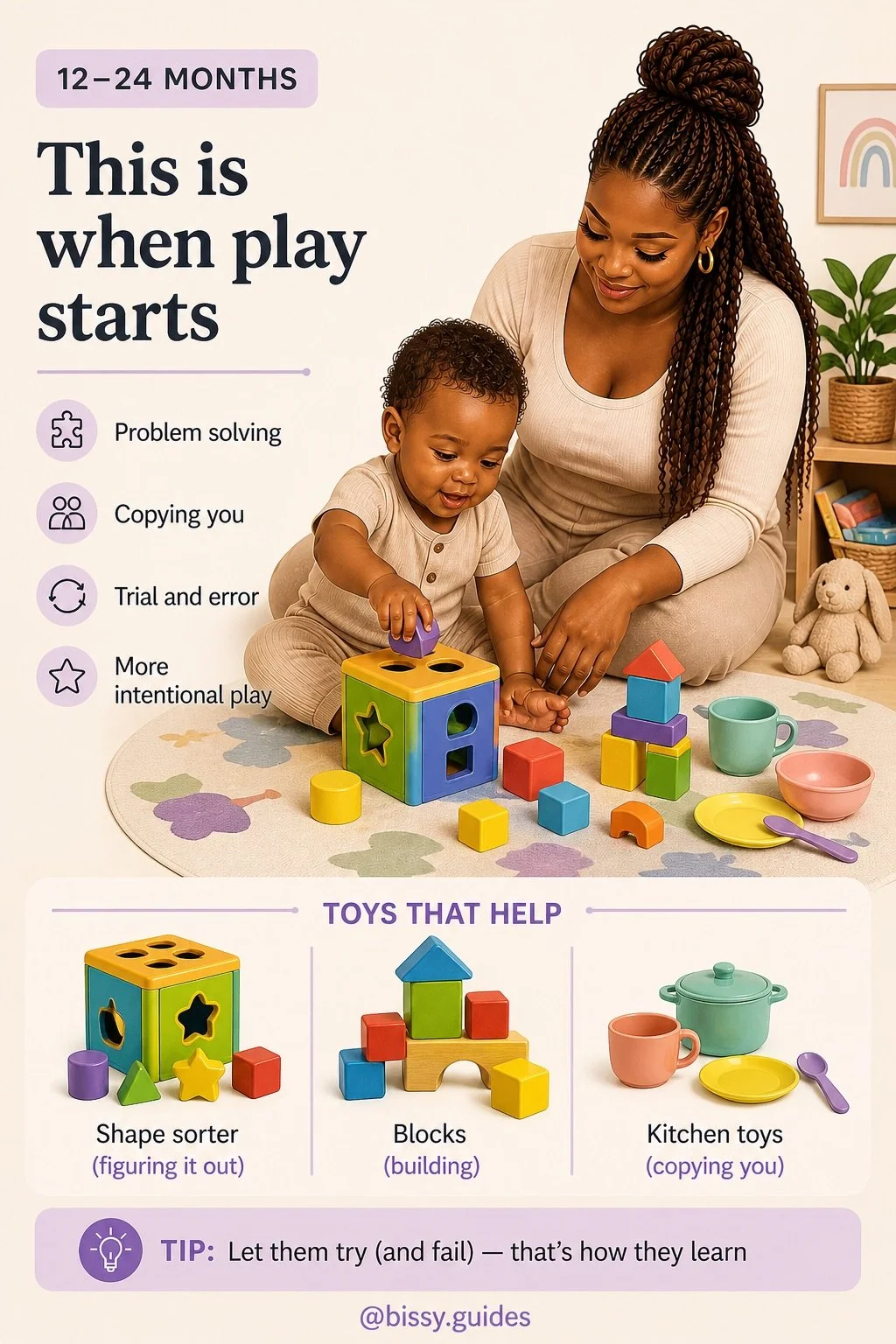
12–24 months — play starts to mean something
This is where you start to see real play.
They’re not just exploring anymore — they’re trying things out.
You’ll notice:
Problem solving
Copying what you do
Trial and error
More intentional play
This is where shape sorters, blocks, and simple role play start to make sense.
You also start noticing their personality more at this stage — some children love movement and noise, while others prefer quieter, repetitive play: Baby personality explained simply
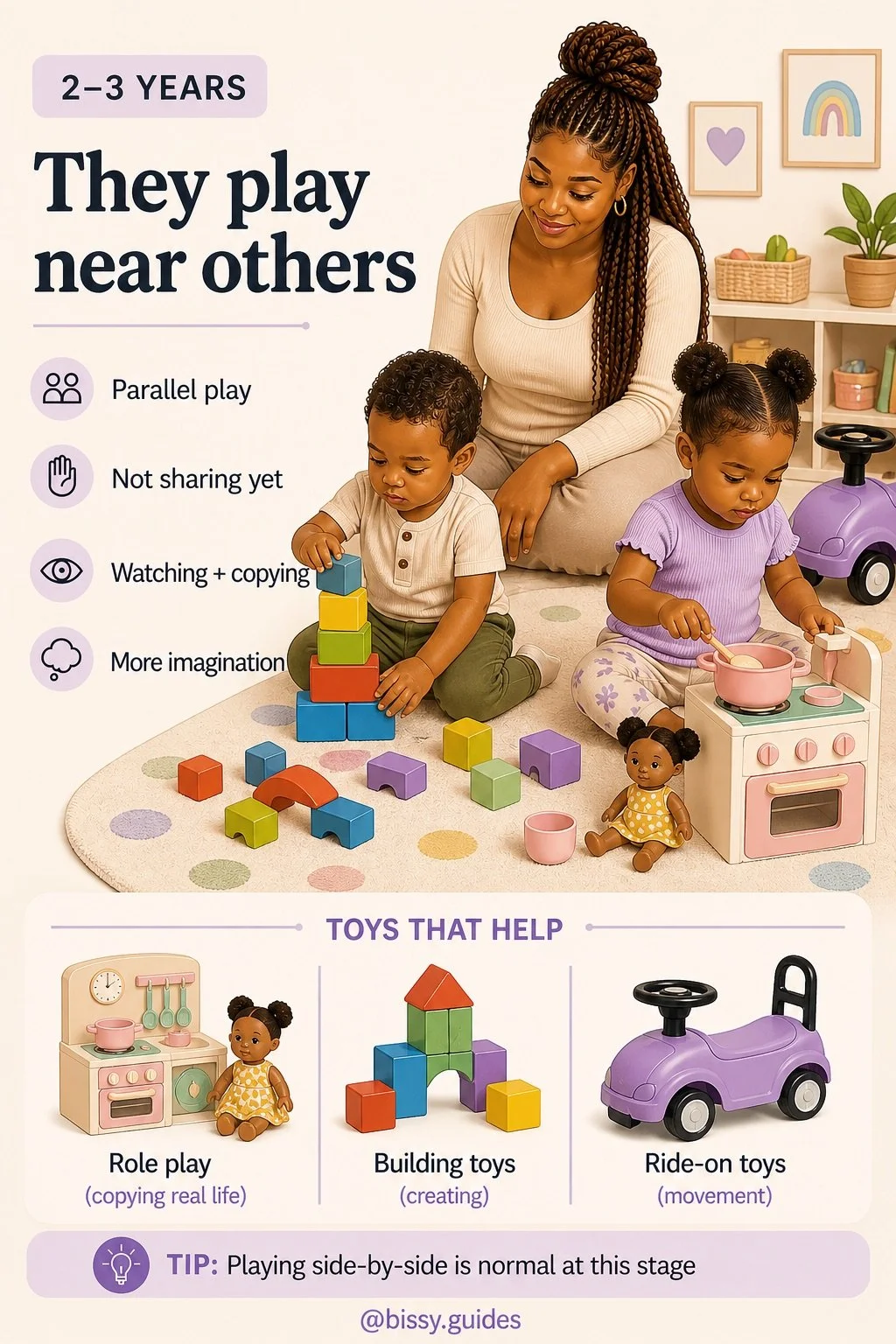
2–3 years — playing near others (not always with them)
This stage catches people off guard.
They’ll play next to other children, but not necessarily with them.
That’s normal.
It’s called parallel play.
Different types of play start showing up more here too — role play, building, movement, and imaginative games all develop differently.
Child’s play types explained simply
You’ll see:
Watching and copying
More imagination
Acting out real-life things
Sharing comes later — so independent play still matters.
This links well with preparing overall:
Different types of play start showing up more here too — role play, building, movement, and imaginative games all develop differently.
Child’s play types explained simply
Final thought
The best toy is the one your baby actually engages with.
Not the most expensive, not the nicest looking — just the one that matches what they’re ready for.
This isn’t professional advice — just a simple breakdown of what I’ve found helpful.
Most of this is easier to understand visually.
I’ve put all my guides into one place so you can browse them properly.
FAQs
Do babies actually need lots of developmental toys?
Not really. Babies usually get the most out of simple interaction, movement, and repetition rather than loads of expensive toys.
What kinds of toys are best for newborns?
High-contrast cards, mirrors, soft rattles, and simple sensory toys tend to work well early on. At that stage, they’re mostly learning through looking, listening, and grabbing.
Why does my baby ignore toys sometimes?
A lot of babies lose interest quickly because their attention span is still very short. Sometimes everyday objects end up being more exciting than the actual toy you bought.
Are wooden toys better for development?
Not automatically. Some wooden toys are great because they’re simple and open-ended, but plastic toys can still be useful depending on what they do.
How do I know if a toy is age appropriate?
Usually check whether it matches what your baby is currently learning — like grasping, sitting, stacking, or pretending. Most age labels are rough guidance rather than strict rules.
Explore more guides