Cradle Cap in Babies Explained Simply: Why It Happens + What Helps
Quick answer
Cradle cap is a common and usually harmless skin condition that causes greasy, scaly patches on a baby’s scalp. This guide explains what cradle cap looks like, how to care for it safely at home and when to seek medical advice.
Cradle cap can look worse than it feels — especially when it suddenly appears out of nowhere or starts spreading across your baby’s scalp.
If you’ve noticed yellow flakes, dry crusty patches, or peeling around the scalp, eyebrows, or hairline, it’s usually cradle cap. It’s extremely common in babies, and although it can look uncomfortable, it’s usually harmless.
Here’s a simple breakdown of what it is, why it happens, and what actually helps.
What causes cradle cap?
Cradle cap happens when natural oils and dead skin build up on the scalp faster than they shed away.
That build-up sticks to the scalp and forms flakes or scales.
Usually it’s a mix of:
Extra oil production in early babyhood
Dead skin getting trapped instead of flaking off naturally
A build-up of white, yellow, or crusty patches across the scalp
Some babies only get a few flakes around the hairline. Others get thicker patches across the scalp, eyebrows, or behind the ears.
Cradle cap can also look a bit different depending on your baby’s skin tone and hair texture, which is why it’s easy to second-guess what you’re looking at.
If you’re also noticing redness, dry patches, or bumps elsewhere on your baby’s skin, my baby rashes guide can help compare some of the most common newborn skin changes.
Why it can feel worse at night
A lot of parents notice cradle cap seems more obvious overnight or first thing in the morning.
That’s usually because:
Less distraction — babies notice little discomfort more when tired
More rubbing — their head moves against the sheet more overnight
Warmth — heat and sweat can make the scalp feel more irritated
It doesn’t usually mean the cradle cap itself is suddenly worse overnight — it just tends to feel or look more noticeable.
What helps: Products I actually used
Frida Baby Derma Frida the Flake Fixer Cradle Cap System. A soft silicone brush that helps loosen flakes gently without scratching the scalp.
Mustela Foam Shampoo for Newborns. A gentle shampoo some parents use to wash away loosened flakes after brushing.
Mustella Cradle Cap Cream. Reduces and removes cradle cap by restoring scalp’s natural balance
What you can do to help
The biggest thing with cradle cap is keeping it gentle.
You don’t need to scrub it off or remove every flake in one go.
What tends to help most:
Soften flakes first
A small amount of baby-safe oil or emollient before bath time can help loosen flakes.
Use a soft brush
A soft baby brush or washcloth can gently lift flakes that are already loose.
Wash it out
Use a gentle baby shampoo afterwards to wash away loosened flakes and leftover oil.
Give it time
Cradle cap usually improves gradually rather than disappearing overnight.
Final thought
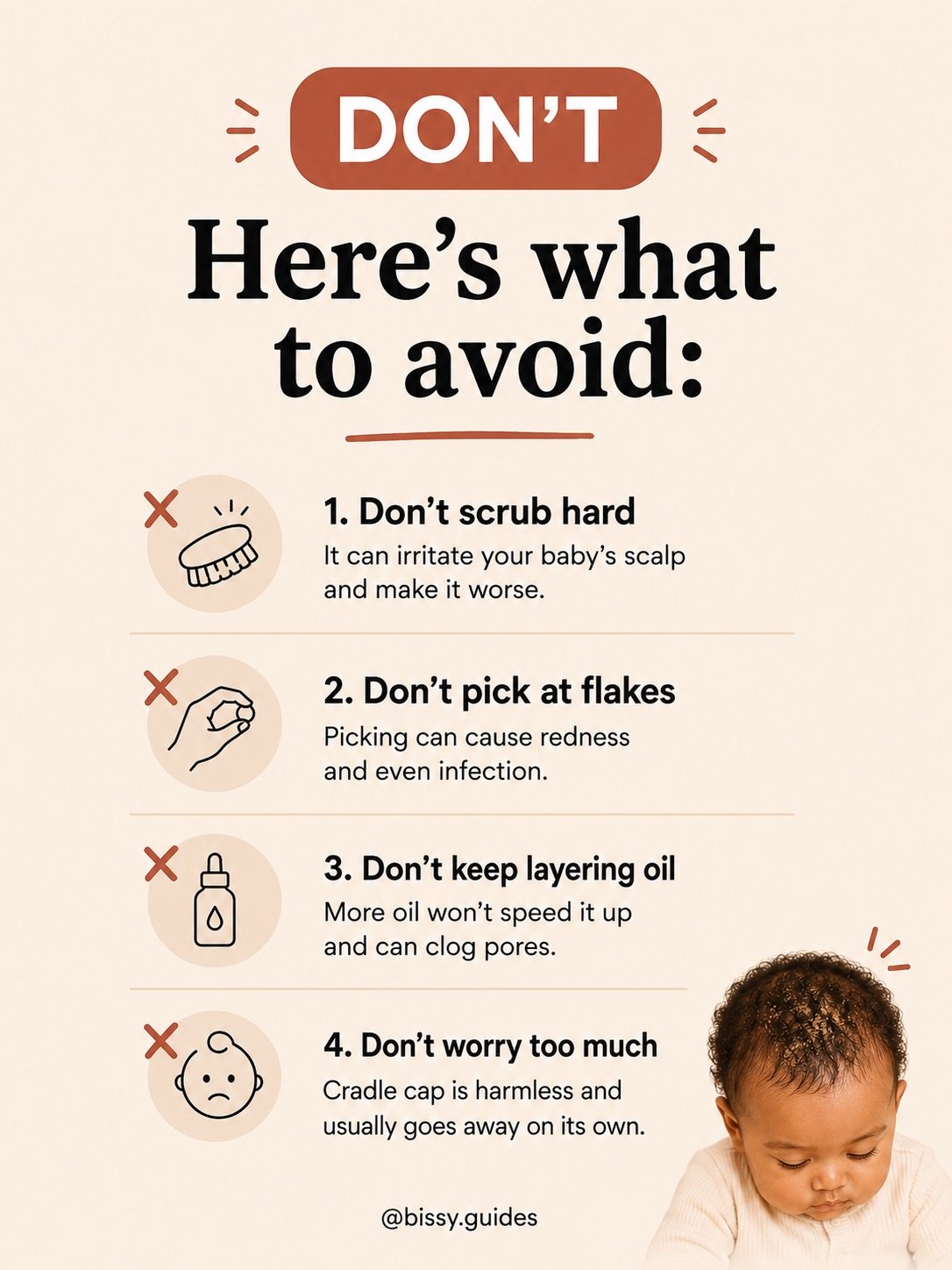
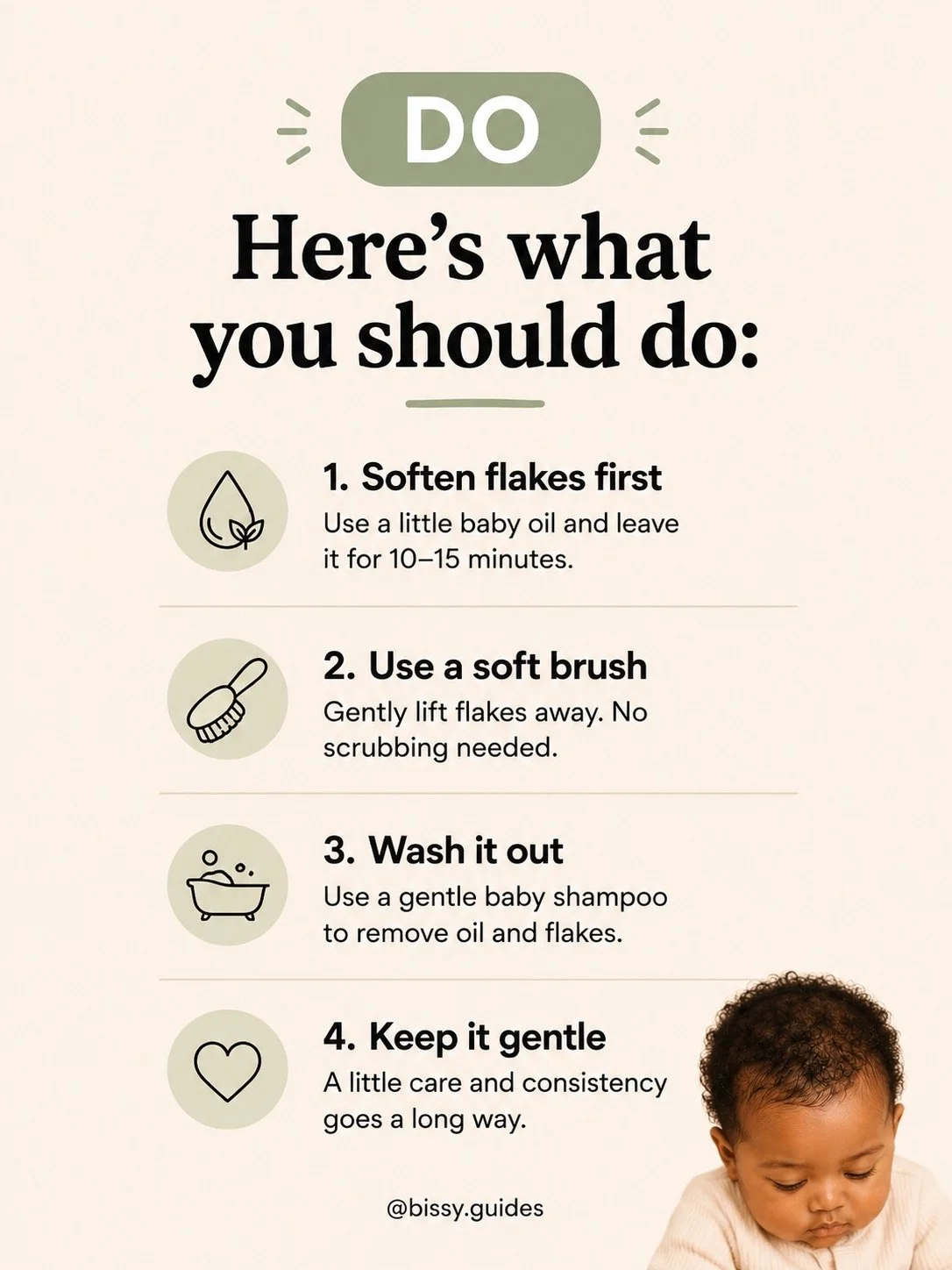
Cradle cap can look dramatic, but it’s incredibly common and usually harmless.
Most of the time it settles with time — and if you’re helping it along, gentle usually works best.
If you just want the quick version, here it is:
Those early baby weeks come with so many little questions at once — skin, sleep, feeding, everything. If you’re in that stage too, my newborn feeding guide might be helpful alongside this one.
This isn’t professional advice — just a simple breakdown of what I’ve found helpful.
Most of this is easier to understand visually.
I’ve put all my guides into one place so you can browse them properly.
FAQs
Is cradle cap normal in babies?
Yes — it’s very common, especially in the first few weeks and months. It can look noticeable, but it’s usually harmless and tends to improve with time.
What causes cradle cap?
Cradle cap happens when natural oil and dead skin build up on the scalp instead of shedding away normally. It isn’t caused by poor hygiene or anything you’ve done.
Should I remove cradle cap flakes?
Only if they’re already loose. It’s best not to pick or force them off, as that can irritate the skin underneath.
Can oil make cradle cap worse?
Sometimes, yes. A little oil before bath time can help soften flakes, but leaving lots on the scalp or reapplying it all day can sometimes make build-up worse.
When should I get cradle cap checked?
It’s worth getting checked if the scalp looks very red, swollen, weepy, bleeding, has an unusual smell, or your baby seems really uncomfortable with it.
Explore more guides