Holiday with a Baby: Things to Check Before You Book
Quick answer
A holiday with a baby usually takes more planning than travelling without children. This guide explains what to consider before you go and how to prepare for a more relaxed family trip.
Booking a holiday with a baby often means thinking about more than just flights and hotels.
A destination that looks perfect on paper can become much harder once you factor in car seats, cots, feeding equipment, healthcare, walking distances, and everything else that comes with travelling as a family.
These are the main things worth checking before you book, so there are fewer surprises once you arrive.
Getting Around
Think about how you'll actually get from place to place once you arrive.
A destination might look perfect, but daily travel can quickly become frustrating if you're carrying a baby, pushing a buggy and navigating public transport at the same time.
Questions worth asking:
How long is the flight?
Will you need a car seat for transfers or getting around?
Will you need a buggy, carrier or both?
Is the destination public transport friendly?
Will you be walking long distances each day?
The age of your child matters too. Parents travelling with newly mobile babies often find holidays feel very different once little ones start exploring. If that's you, Helping Your Baby Crawl, Helping Your Baby Stand, and Helping Your Baby Walk may help you understand what to expect before travelling.
Health & Safety
Healthcare systems, climate and local risks vary from one destination to another.
Checking these details before booking can prevent a lot of stress later.
Things to consider:
How easy is it to access healthcare if needed?
Are any vaccines recommended for the destination?
Are mosquitoes or insect-borne illnesses a concern?
Is the tap water safe for drinking or preparing formula?
How will the local temperature affect your baby?
If you're travelling somewhere warm, it may also help to read Signs Your Baby Is Too Hot or Too Cold. Parents heading abroad during summer often find Common Baby Rashes useful too, as heat, sweat and sun exposure can sometimes cause skin irritation.
What helps: Products I actually used
Nappy bag with portable changing mat — keeps changing essentials organised and easy to access.
Two-way baby carrier — useful for airports, sightseeing, and hands-free travel.
Portable blackout blind – helpful if your baby struggles to sleep in bright rooms.
Dummy clip – Helps prevent comfort items ending up on the floor.
Where You'll Stay
The room itself can have a bigger impact on your holiday than many parents expect.
Simple things like a cot, sink or kitchenette can make everyday tasks much easier.
Before booking, consider:
Is there heating or air conditioning?
Is a travel cot or cot available?
Is there a sink or kitchenette for bottles and feeding equipment?
Is the hotel baby-friendly or child-friendly?
Will the room setup work for your family?
These details can seem minor when booking, but they often become some of the most important parts of the trip once you arrive.
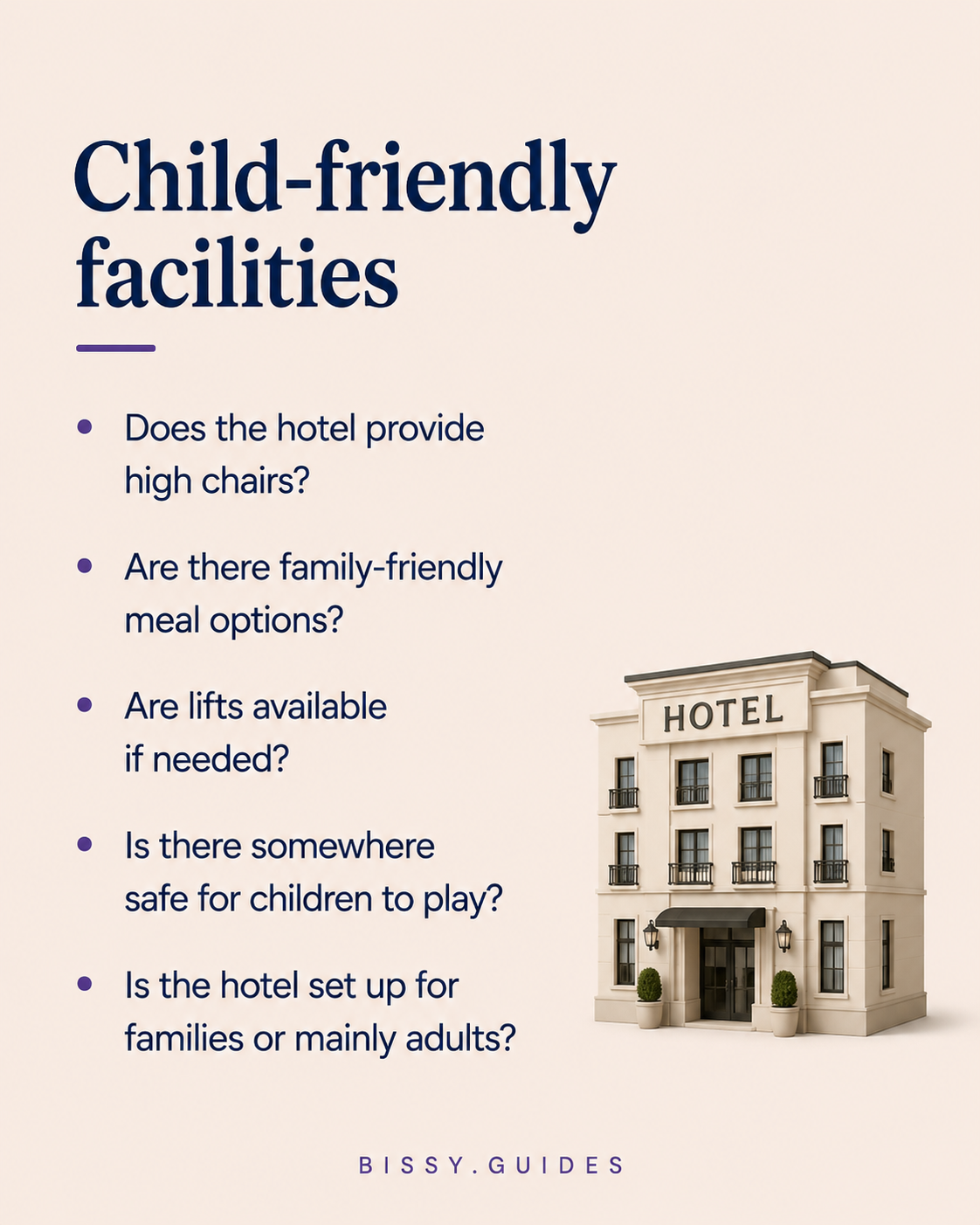
Child-Friendly Facilities
A hotel can allow children without necessarily being designed for families.
Checking facilities before booking can help you avoid surprises once you're there.
Questions worth asking:
Does the hotel provide high chairs?
Are there family-friendly meal options?
Are lifts available if needed?
Is there somewhere safe for children to play?
Is the hotel mainly designed for families or adults?
If you're travelling with a toddler, it can also help to have realistic expectations for their stage of development. What to Expect From an 18-Month-Old may give you a better idea of how much movement, exploration and entertainment they'll need while you're away.
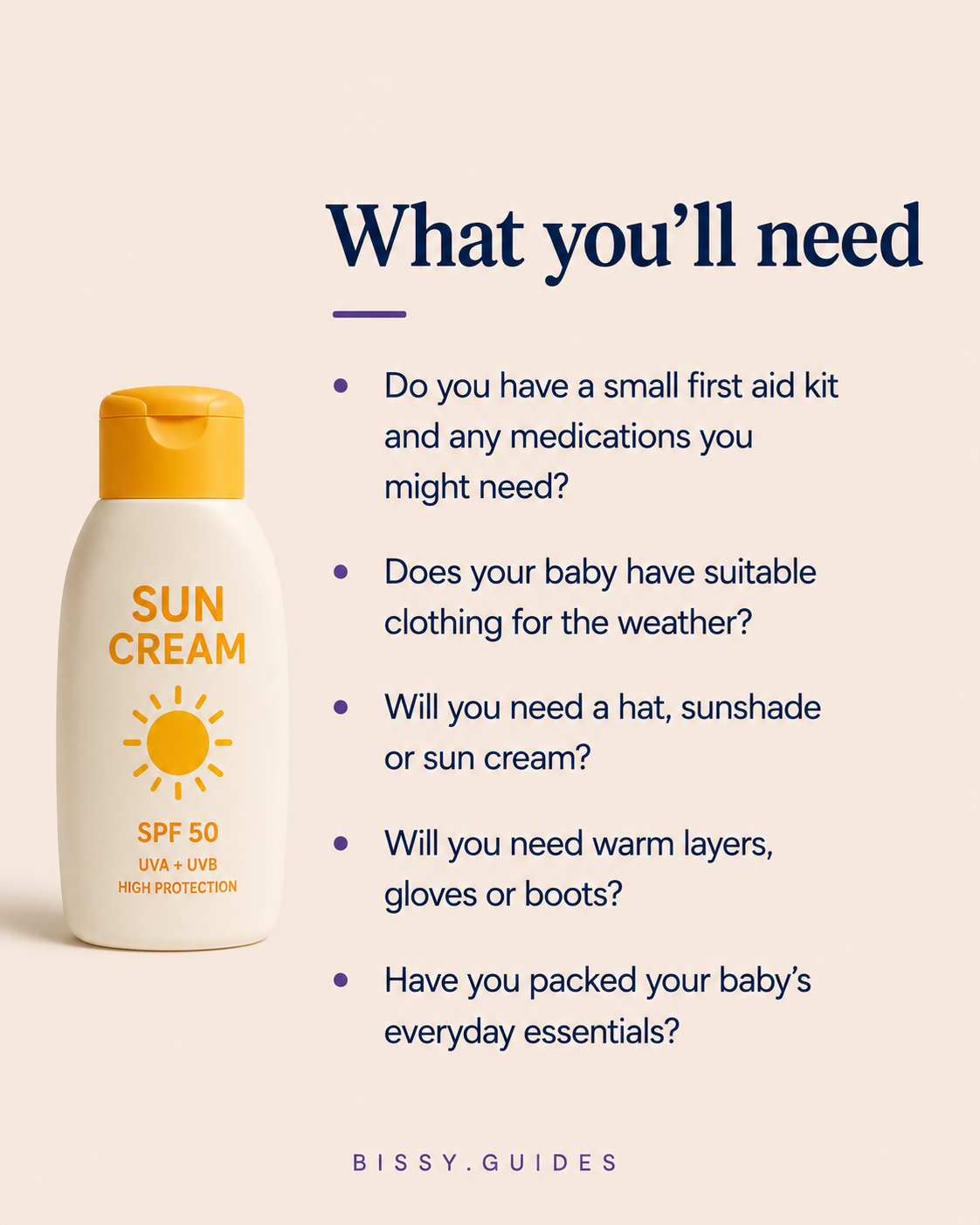
What You'll Need
Packing for a baby is often more about planning than packing more.
Think about the situations you're likely to face during the trip and what you'll need to manage them.
Consider:
A small first aid kit and medications
Weather-appropriate clothing
Sun hats, sunshades or sun cream
Warm layers where needed
Everyday essentials that would be difficult to replace
Before travelling, many parents find it helpful to work through a checklist. If you're still deciding what to bring, Baby Travel Essentials can help make sure you've covered the basics.
Final thought
A holiday with a baby doesn't have to be complicated.
Most problems can be avoided simply by checking a few practical details before you book. Transport, healthcare, accommodation and family-friendly facilities can all have a bigger impact on your trip than the destination itself.
A little planning now can make your holiday much more enjoyable later.
This isn’t professional advice — just a simple breakdown of what I’ve found helpful.
Most of this is easier to understand visually.
I’ve put all my guides into one place so you can browse them properly.
FAQs
What is the best age to take a baby on holiday?
There's no perfect age. The practical considerations simply change depending on your baby's feeding, sleep and mobility stage.
Do babies need a passport for international travel?
Yes. Babies and children usually need their own passport when travelling internationally.
Do babies need travel insurance?
Travel insurance can help cover unexpected medical treatment, cancellations and travel disruptions while you're away.
Can you take formula on a plane?
Yes. Baby formula, expressed milk and baby food are usually allowed through airport security, although rules can vary slightly by airport.
Can babies drink tap water abroad?
That depends on the destination. Always check local guidance before using tap water for drinking or preparing formula.
How do you sterilise bottles on holiday?
Many parents use travel sterilisers, sterilising tablets or accommodation with a microwave or kitchenette.
What should I pack for a holiday with a baby?
Essentials often include clothing, medications, feeding equipment, sleep items, sun protection and travel documents.
Do hotels provide cots and high chairs?
Many family-friendly hotels do, but it's always worth checking before booking as availability varies.
How do I keep my baby cool on holiday?
Shade, lightweight clothing, hydration and avoiding the hottest parts of the day can all help.
What are the most commonly forgotten baby holiday items?
Parents often forget medications, comfort items, dummies, sleep sacks, chargers and sun protection.
Explore more guides