What to pack in your maternity hospital bag (what you’ll actually use)
Quick answer
Packing your hospital bag with the essentials can help you feel more prepared for labour, birth and the first hours with your baby. This guide covers the items most parents actually use without overpacking.
Packing your hospital bag sounds simple… until every list you see is completely different.
Some are packed with things you’ll never touch, and others miss the basics completely.
This is just a realistic breakdown of what actually gets used — not everything, just what makes your stay easier.
ESSENTIALS (THE THINGS YOU’LL REACH FOR FIRST)
This is the core stuff — the things you’ll end up using without thinking.
Drinks like water or isotonic drinks help more than you’d expect, especially if you’re not up for eating straight away.
Snacks are one of those things that seem minor, but you’ll be glad they’re there — something easy and not too sugary works best.
The peri bottle is one of those items people don’t always think to pack, but it makes things much more comfortable after birth.
Then it’s your basics — nappies, wipes, cotton wool, towels — just enough so you’re not relying on the hospital for everything.
COMFORT & PRACTICALS
This is what makes the whole experience feel easier rather than just manageable.
Your own toiletries make a difference — even just having your usual products helps you feel more like yourself.
A long phone charger is one of the most used things in your bag, and it’s easy to forget.
Lip balm, a pillow, even a small handheld fan — they seem small, but when you’re in one space for a while, they matter.
This is the stuff that turns it from “just getting through it” to actually being comfortable.
What helps: Products I actually used
Hand held fan. Really helpful during labour and on ward at night
Baby water wipes. Simple, reliable option
If you’re still figuring out what’s actually worth buying beforehand, I broke that down in preparing for a baby: what you actually need vs what’s extra
CLOTHING & RECOVERY
This is where comfort matters most.
Front-opening nighties and nursing bras make feeding easier without having to think about it.
Disposable underwear and maternity pads are just easier early on — less effort and more practical.
Slippers and a dressing gown are mainly about comfort and being able to move around without feeling exposed.
If you’ve seen my C-section recovery essentials guide, you’ll notice there’s a lot of overlap — it’s all about making things easier rather than overcomplicating it.
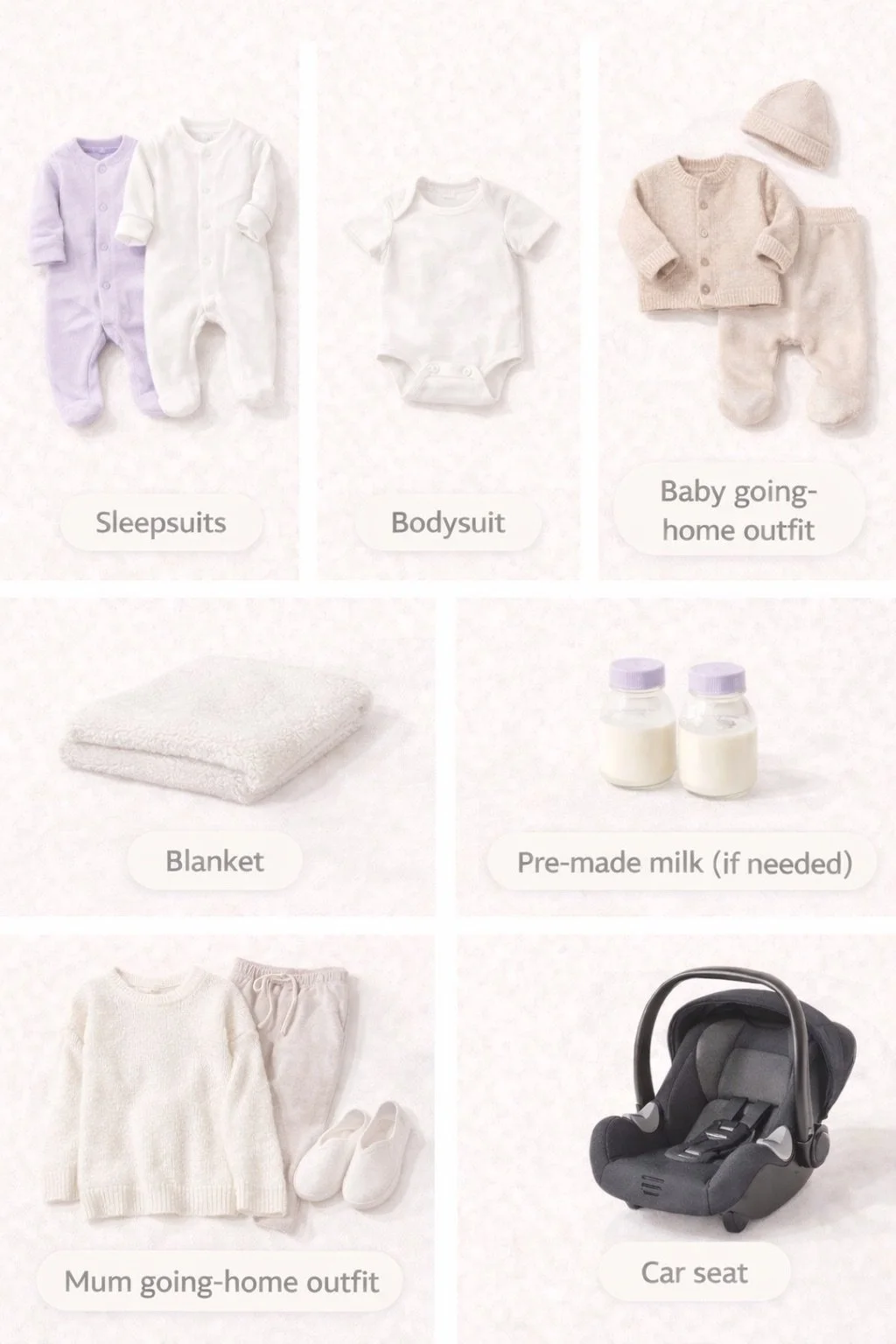
BABY ITEMS
You don’t need loads here — just enough to cover the basics.
A few sleepsuits and a bodysuit will usually get you through your stay.
A going-home outfit is more for you than the baby — something simple works best.
A blanket is useful, especially for leaving the hospital.
Pre-made milk is optional, depending on how you plan to feed.
And your car seat — easy to overlook when packing, but obviously essential for getting home.
Final thought
You don’t need loads — just the things that make your time there easier.
Most of it comes down to comfort and convenience, not being overly prepared.
This isn’t professional advice — just a simple breakdown of what I’ve found helpful.
Most of this is easier to understand visually.
I’ve put all my guides into one place so you can browse them properly.
FAQs
Do I really need to pack this early?
Honestly, yes. Even having the basics packed by around 32–35 weeks made me feel less stressed. You can always add things later.
How many baby outfits should I actually bring?
A few sleepsuits and a going-home outfit is usually enough. Babies mainly stay wrapped up or sleeping most of the time.
Do hospitals provide nappies and wipes?
Some do, some don’t — and it varies by ward. I’d personally still pack your own so you’re not relying on hospital supplies.
Why do people recommend a long phone charger?
Hospital plugs are weirdly far away from the bed sometimes. A long charger is one of those things you don’t think about until you really need it.
Do I need pre-made formula if I plan to breastfeed?
Not necessarily. Some people pack it just in case for peace of mind, while others don’t bring any at all. It really depends on what makes you feel prepared.
Explore more guides