Baby hygiene & grooming basics explained simply
Quick answer
Baby hygiene and grooming involves simple everyday care such as bathing, cleaning skin folds, nail care and looking after your baby's hair and scalp. This guide covers practical ways to keep your baby clean and comfortable without overcomplicating their routine.
Some of the hardest newborn things aren’t the big things — they’re the tiny daily habits nobody really explains beforehand.
Things like skin folds staying damp, cradle cap suddenly appearing, figuring out bedtime baths, or realising babies somehow get milk absolutely everywhere.
This isn’t a strict routine guide — just the small hygiene and grooming basics that tend to make everyday life a bit easier once you know them.
Baths & skin basics
Newborn skin gets irritated surprisingly easily, especially in warm folds around the neck, thighs, underarms, and chin.
One thing I didn’t fully realise at first was how much moisture gets trapped in those tiny folds. Milk dribbles, sweat, drool, bath water — it adds up quickly. Keeping folds dry after baths or feeds can help prevent irritation before it starts.
Fragrance-free products also tend to work better for sensitive skin. A lot of baby products smell lovely but can actually make dryness or irritation worse.
Heat rash is another one that catches people off guard. It often looks more dramatic than it is, and sometimes it’s simply from babies being overdressed rather than unwell.
If you’re trying to work out whether something is normal irritation, eczema, heat rash, or something else entirely, I’ve also broken down the most common newborn rashes in my baby rashes explained simply guide.
If you’re currently dealing with unexplained rashes or irritated skin, my blog on baby rashes explained simply breaks down some of the most common newborn skin changes in a really easy-to-understand way.
And if you’re figuring out what actually matters in those first few newborn weeks, my newborn feeding basics guide also overlaps a lot with things like drool rashes, milk residue, and general newborn care habits.
Hair & scalp care
Cradle cap is one of those things that can look dramatic but is usually very normal.
Gentle cradle cap brushes can help loosen flakes slowly without aggressively scrubbing the scalp. I think a lot of parents panic and try to remove everything immediately, but slower and gentler usually works better.
Hair texture also changes what works best. Wider-tooth combs tend to work better for thicker curls, while softer brushes are often easier for finer hair textures.
One thing that surprised me was how much easier detangling becomes on damp hair instead of fully dry hair — especially with curlier textures.
Curly hair also usually needs more moisture than straighter hair, even in babies. Keeping the scalp moisturised can help reduce dryness and itchiness without overcomplicating routines.
A lot of these little routines become easier once everything has a place too. I realised pretty quickly that having small grooming essentials organised together saved so much stress during overtired evenings and rushed mornings.
What helps: Products I actually used
Dentinox cradle cap shampoo — Helps soften and loosen cradle cap flakes gently
Nala’s Baby wash— Gentle everyday wash for sensitive skin
Nala’s Baby nightime oil— Useful for dry skin, scalp moisture, and baby massage routines
Electric baby nail file — Feels much gentler than tiny clippers in the newborn stage
Soft cradle cap brush— Helps lift flakes without aggressive scrubbing
Baby grooming organiser kit — Keeps all the small grooming bits together in one place
UV car window sunshades— Helps reduce direct sunlight during car journeys
Baby water wipes. Simple, reliable option
Bedtime & routine tips
Baths don’t magically make every baby sleepy — but they can help create predictable bedtime cues over time.
Some babies love baths immediately. Others absolutely hate the transition afterwards more than the bath itself.
Having towels, nappies, pyjamas, and feeds prepared beforehand honestly makes a huge difference because newborns tend to go from calm to furious very quickly once they’re cold.
Feed-after-bath routines also ended up working much better for us than trying to separate everything too much.
Dim lighting after baths can help keep the environment calmer before night feeds too.
Oil massages can feel calming for some babies as well, although it’s definitely one of those things that depends on the baby rather than being a guaranteed “sleep trick.”
If evenings suddenly become difficult later on, my baby sleep regressions guide and separation anxiety & sleep guide explain some of the bigger developmental reasons bedtime can suddenly fall apart too.
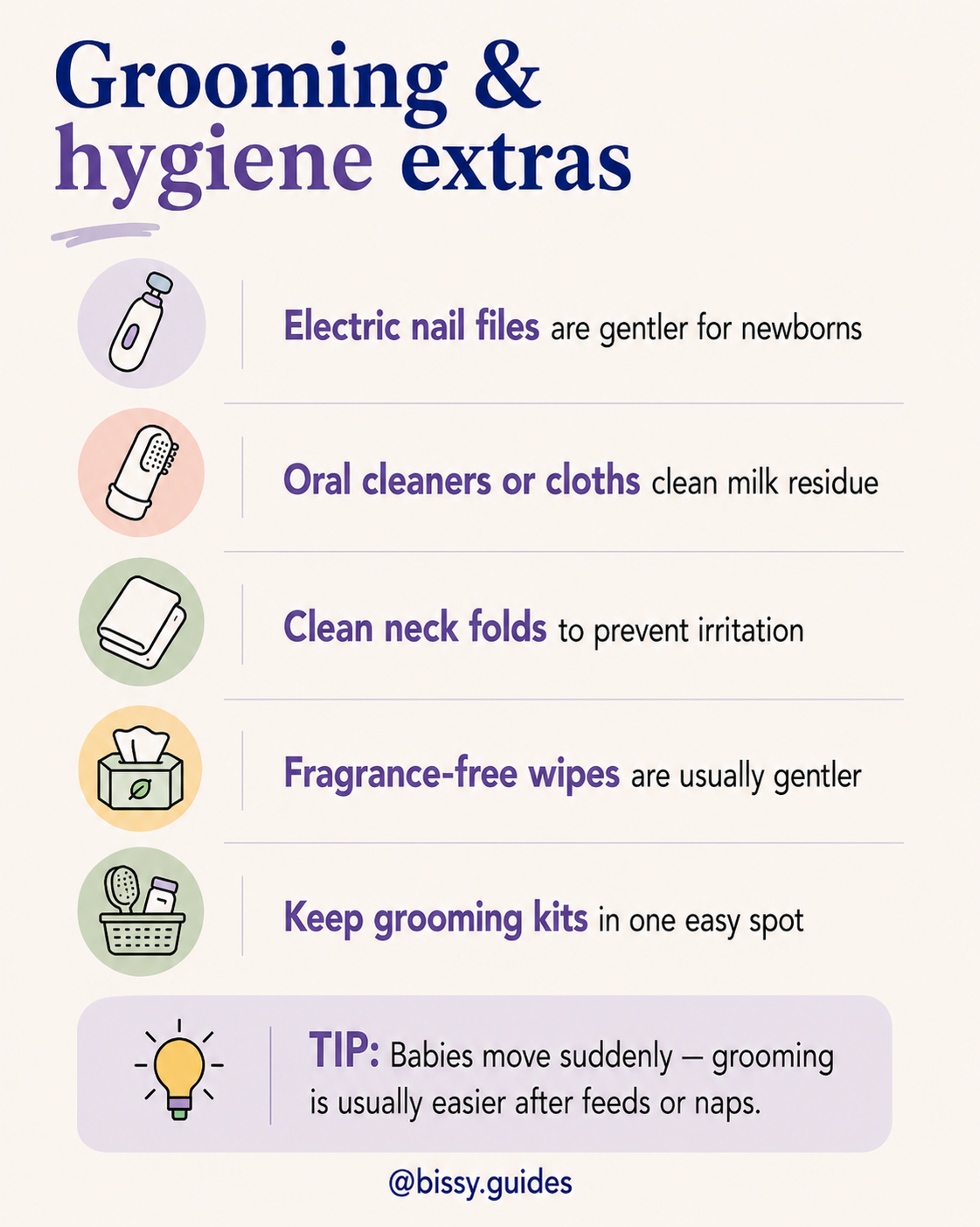
Grooming & hygiene extras
Electric nail files are genuinely one of the best newborn purchases in my opinion. They feel much less stressful than baby nail clippers in those early weeks when babies suddenly jerk their hands around.
Oral cleaners or soft cloths can also help clean leftover milk residue from gums and tongues gently.
Another thing people don’t always mention is how quickly moisture builds up around neck folds. It’s one of the easiest places for irritation to appear if milk or drool sits there too long.
Fragrance-free wipes also tend to be gentler overall, especially for babies already prone to irritation or dryness.
And honestly, keeping all the tiny grooming bits in one easy place helps more than people think — especially during overtired newborn evenings.
This is also why I ended up keeping mini hygiene essentials inside my nappy bag rather than upstairs — especially wipes, oral cloths, and nail files during longer outings. My nappy bag essentials guide goes through the small things that ended up being surprisingly useful outside the house too.
Final thought
Most newborn hygiene routines become easier with time. Usually it’s the small consistent habits — not perfect routines — that make the biggest difference.
This isn’t professional advice — just a simple breakdown of what I’ve found helpful.
Most of this is easier to understand visually.
I’ve put all my guides into one place so you can browse them properly.
FAQs
How often should you bathe a newborn?
Honestly, newborns usually don’t need daily baths. A few times a week is often enough unless there’s a big poo explosion or lots of spit-up happening but that is personal preference.
Is cradle cap painful for babies?
Usually no — it often looks worse than it is. Most babies don’t seem bothered by it unless the skin becomes irritated from over-scrubbing or dryness.
Are fragrance-free baby products actually better?
For sensitive newborn skin, they often are. Some scented products can make irritation or dryness worse without parents realising immediately.
When should I start cleaning my baby’s mouth?
You can gently wipe gums or milk residue quite early using a soft cloth or newborn oral cleaner. It doesn’t need to be aggressive or complicated.
Are electric baby nail files worth it?
Personally, yes. They usually feel much gentler and less stressful than clipping tiny newborn nails with standard clippers, especially in the early weeks.
Explore more guides