Baby Sleep Troubleshooter
Quick answer
If your baby won't sleep or keeps waking, the cause is often a combination of age, sleep needs and daily routines rather than one single problem. This guide helps you identify the most common reasons your baby may be struggling with sleep and directs you to the most relevant guides for your situation.
One thing I've learned is that lots of baby sleep problems look exactly the same at first.
A baby who is waking every hour might be going through a sleep regression, be overtired, be hungry, be cutting teeth, be too warm, be going through a growth spurt or simply need a change in routine.
The tricky part isn't always the sleep itself.
It's working out where to start.
Before diving into regressions, wake windows or sleep pressure, it's worth checking the foundations too.
RELATED GUIDE: IS YOUR BABY'S SLEEP SPACE SAFE?
This page isn't designed to "fix" sleep.
It's designed to help narrow down the most likely cause and point you towards the guides that are most relevant to your situation.
What's Happening?
One of the reasons baby sleep feels so confusing is that lots of different causes can create very similar sleep changes.
A baby who is waking more overnight might be going through a sleep regression, learning a new skill, experiencing separation anxiety or simply going through a growth spurt.
A baby who is fighting sleep might actually be overtired, undertired, overstimulated or not have enough sleep pressure built up yet.
Sometimes bedtime changes because wake windows need adjusting. Other times sleep suddenly worsens because of teething, illness, temperature or environmental changes.
The sections below break down some of the most common reasons parents notice changes in their baby's sleep and link to the guides that explore each topic in more detail.
What helps: Products I actually used
These won't solve every sleep challenge, but they can help remove some of the most common environmental barriers to sleep.
Room Thermometer.A room thermometer also helps way more than I expected, especially when the weather randomly changes overnight and the bedroom suddenly feels completely different.
Sleeping Bag.A simple way to keep baby warm without loose bedding.
Red or Amber Night Light. Useful for feeds and checks without making the room too bright.
White noise machine. Can help reduce sudden wake-ups from household noise or lighter sleep phases.
A blackout blind genuinely helped more than I expected, especially during lighter evenings and early morning wake-ups. I underestimated how much brightness affected settling.
Waking More Often?
If your baby is suddenly waking more overnight, waking earlier than usual, or seems more unsettled during sleep, there are a few common causes worth considering first.
Sleep regressions, developmental leaps, growth spurts and separation anxiety can all temporarily increase night waking. Some babies also naturally wake more when they're learning new skills or going through periods of rapid development.
The challenge is that these causes can look very similar from the outside. Looking at what else has changed recently often provides the biggest clue.
Related guides:
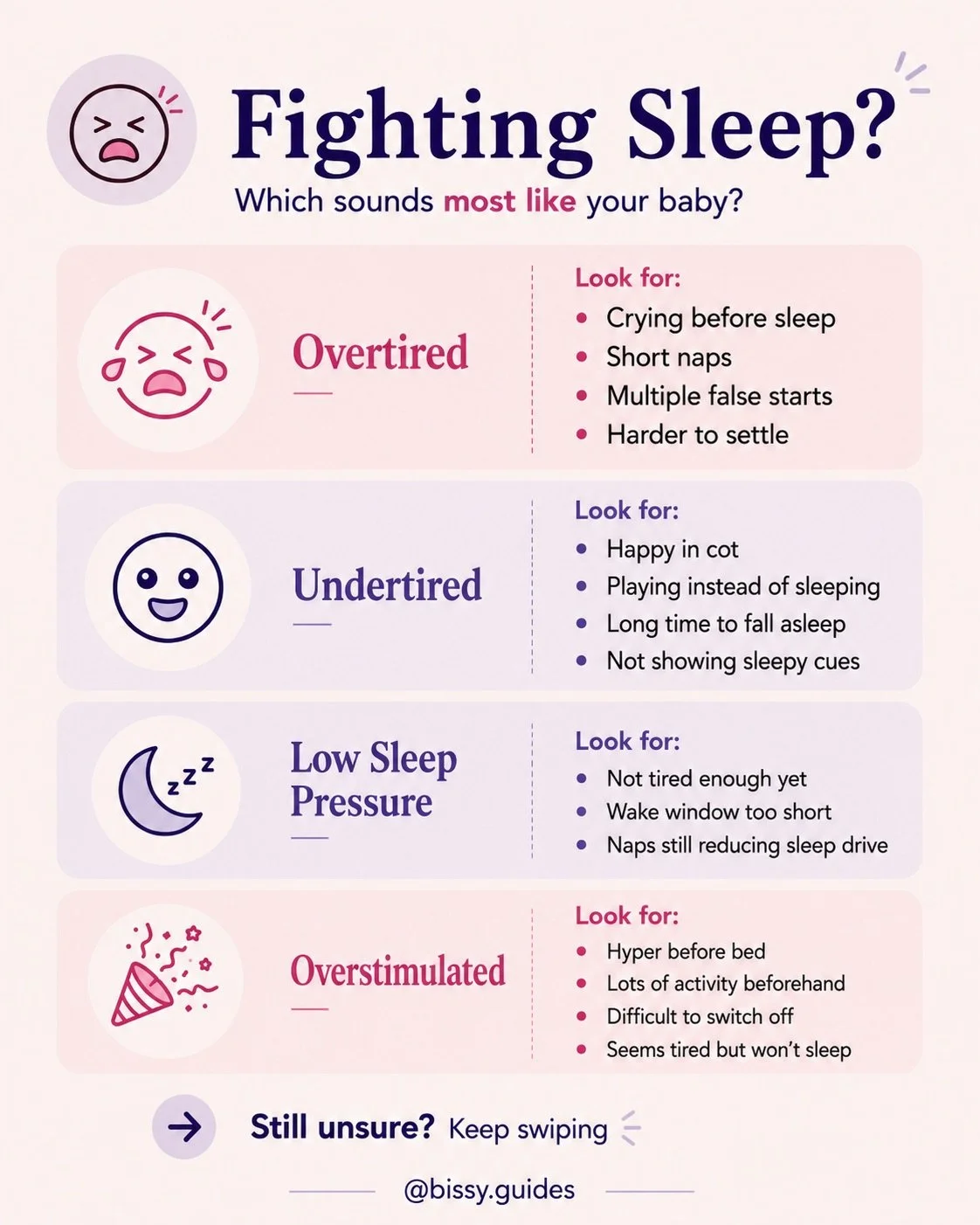
Fighting Sleep?
If naps or bedtime have suddenly become a battle, timing is often the first place worth looking.
Many babies fight sleep because they're overtired, undertired, overstimulated or simply don't have enough sleep pressure built up yet. The tricky part is that these can often look surprisingly similar.
A baby rubbing their eyes and crying at bedtime isn't always overtired. Sometimes they're actually undertired and not ready to sleep yet.
Related guides:
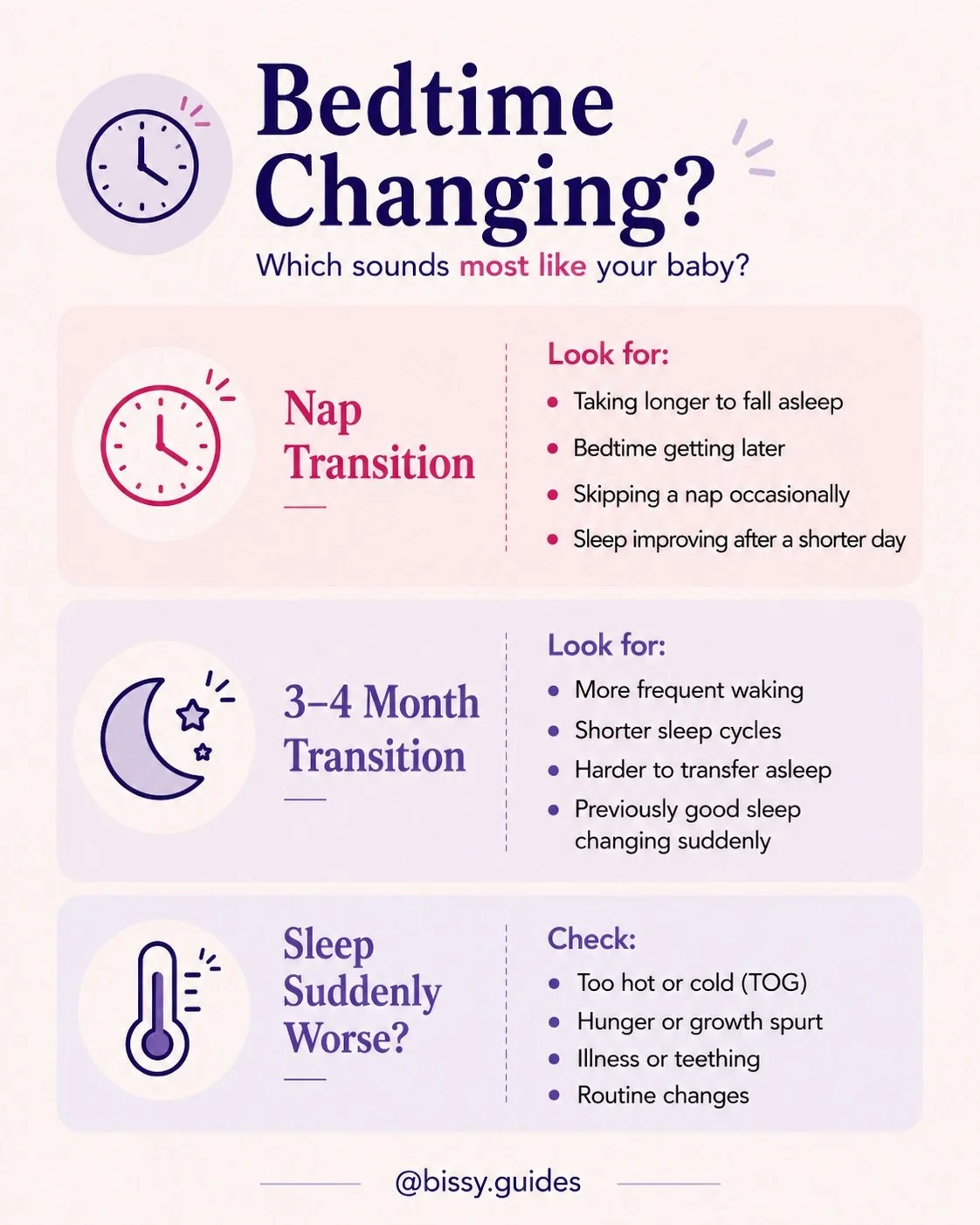
Bedtime Changing?
Sometimes sleep doesn't necessarily get worse.
It simply changes.
As babies grow, wake windows change, naps begin to shorten or disappear, and developmental transitions can affect the whole day. What worked a few weeks ago may no longer be the best fit.
Related guides:
Sleep Suddenly Worse?
Sometimes sleep is going reasonably well and then seems to fall apart overnight.
Before assuming it's behavioural, it's worth checking practical causes first. Illness, teething, temperature changes, hunger and changes to routine can all have a surprisingly big impact on sleep.
Sometimes the reason really is something simple.
Related guides:
Final thought
Sleep is rarely caused by one thing.
A baby might be going through a growth spurt while also cutting teeth. They might be overtired because a nap transition has started. They might be waking more because they're unwell and going through separation anxiety at the same time.
That's why looking at the bigger picture can be so helpful.
If you're not sure where to start, use the decision tree, choose the section that sounds most familiar, and then explore the guides that best match your situation.
This isn’t professional advice — just a simple breakdown of what I’ve found helpful.
Most of this is easier to understand visually.
I’ve put all my guides into one place so you can browse them properly.
FAQs
Why is my baby suddenly waking every hour?
Sleep regressions, growth spurts, illness, teething, separation anxiety and overtiredness can all cause frequent waking. Looking at what else has changed recently often helps identify the most likely cause.
Is every sleep change a sleep regression?
No. Sleep regressions are only one possible explanation. Growth spurts, developmental leaps, illness, teething and routine changes can all affect sleep too.
How do I know if my baby is overtired or undertired?
The signs can look surprisingly similar. Looking at wake windows, sleep pressure and overall sleep patterns often provides more useful clues than focusing on one symptom.
Why is my baby fighting naps but sleeping fine at night?
Some babies struggle more with daytime sleep because there is less sleep pressure and more stimulation around them. Wake windows and nap timing are often worth reviewing.
Why does my baby wake up 30 minutes after bedtime?
This is often called a false start. Common causes include overtiredness, undertiredness, low sleep pressure or developmental changes.
Why is my baby waking up early every morning?
Early waking can be linked to light exposure, room temperature, overtiredness, sleep pressure, hunger or developmental changes. Looking at the whole sleep picture usually gives the best clues.
Can teething really affect sleep?
Yes, although not every sleep issue is caused by teething. Some babies experience very little disruption, while others wake more frequently due to discomfort.
Can growth spurts affect sleep?
Yes. During growth spurts, babies often feed more frequently and may wake more overnight. These phases are usually temporary.
Can being too hot or too cold affect sleep?
Yes. Temperature can affect both settling and overnight sleep. A room thermometer and appropriate sleeping bag TOG can help create a more comfortable sleep environment.
Why did my baby's sleep suddenly get worse overnight?
Illness, teething, growth spurts, developmental leaps, routine changes and sleep regressions can all cause sudden changes in sleep.
What should I check first when my baby won't sleep?
Start with the basics: illness, temperature, hunger, teething, recent developmental milestones and changes to routine. These often explain more sleep disruptions than people realise.
Is it normal for baby sleep to change all the time?
Yes. Baby sleep changes constantly during the first few years. Development, feeding, health, temperament and routine changes can all influence sleep patterns.
Explore more guides