Breast pumps & breastfeeding gear explained simply
Quick answer
The right breastfeeding equipment can make feeding and expressing milk more comfortable and convenient. This guide explains common breast pumps and breastfeeding accessories, helping you decide what you may actually need.
I genuinely didn’t realise how many breastfeeding and pumping products existed until I had a baby.
Suddenly everyone’s talking about wearable pumps, hospital grade pumps, collectors, breast pads, milk warmers and storage bags like you’re already supposed to know what all of it means.
Some things are actually really useful.
Some things are just nice extras.
And some things sound identical but do completely different jobs.
So this is the simple breakdown I wish I had earlier.
Different types of breast pumps
Not all pumps feel the same at all, which is why one person will love a pump and another person absolutely hates it.
Wired pumps are usually stronger and are often better if you’re pumping regularly or trying to establish supply early on. They’re less portable, but a lot of people respond really well to the stronger suction.
Wearable pumps are popular because they’re hands-free and easier when you’re trying to do 14 things at once. They’re convenient for moving around, but they’re usually not quite as strong as wired pumps.
Manual pumps are honestly underrated. Some people actually respond better to them because the suction can feel more similar to a baby feeding. They’re quiet, portable and surprisingly strong.
If you’re also trying to figure out feeding and supply in general, my
Breastfeeding basics guide and
Increasing milk supply guide link really well with this too.
What people actually notice when using a pump
A lot of pump marketing sounds impressive until you’re the one cleaning it at 2am.
The things people usually end up caring about are:
suction strength
comfort
battery life
noise level
easy cleaning
replacement parts
flange fit
Hospital grade pumps are usually stronger and designed for frequent pumping, which is why they’re commonly used early postpartum or in hospitals.
Something I didn’t realise at first is how much flange sizing can affect comfort too. A pump can technically be “good” but still feel awful if the fit isn’t right.
If you’re building your newborn setup overall, this also links well with my
Preparing for a baby guide and Hospital bag essentials guide because a lot of this suddenly becomes relevant very quickly postpartum.
What helps: Products I actually used
Portable milk warmer.Probably one of my most-used feeding products honestly. It keeps milk warm for longer trips out, the battery lasts well, and the charge display is actually useful.
Spectra S2 breast pump. A really popular hospital-grade style wired pump. Strong suction and especially good if you’re pumping regularly or trying to build supply early on.
MomMed wearable breast pump.Much easier for multitasking and moving around. Good if you don’t want to be attached to one place while pumping.
Silicone breast pads (LilyPad style). Really good overnight because they help prevent leaking without needing to wear a bra constantly.
Silver nipple shields. A lot of breastfeeding mums swear by these early postpartum when nipples are sore during the first few weeks.
Leak protection, collectors & breast pads
These all sound really similar at first, but they actually do different things.
Haakaa-style silicone collectors collect leaking milk passively during feeds. A lot of people use them on the opposite side while baby feeds.
Milk collectors sit inside your bra and catch leaking milk throughout the day.
Breast pads absorb leaks:
reusable pads can save money long term
disposable pads are easier when you’re out longer
Silicone breast pads (like LilyPad style ones) are different again because they stick directly onto the breast and help prevent leaking altogether. I especially liked them overnight because I didn’t always want to wear a bra constantly.
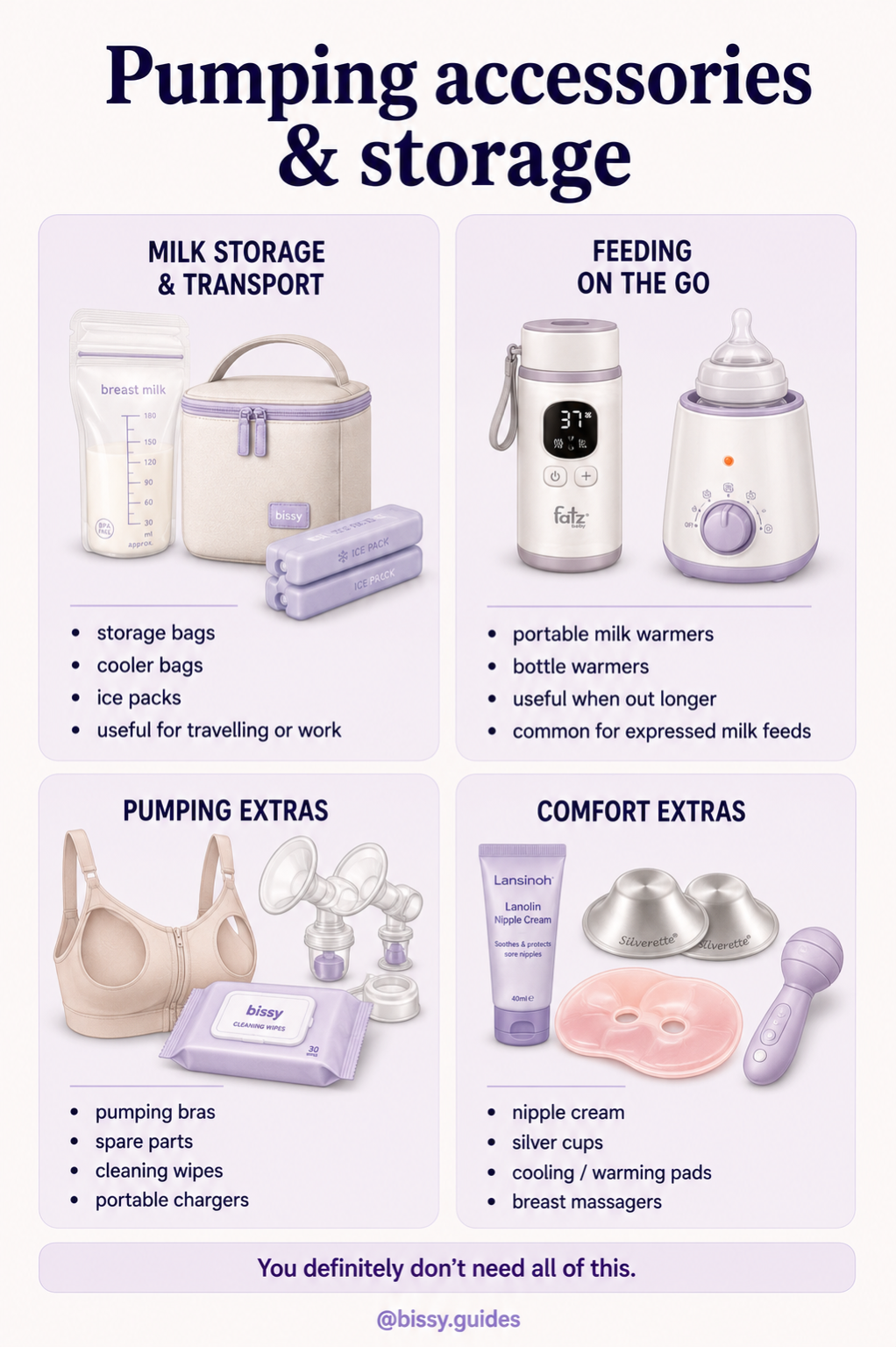
Pumping accessories & storage
Once you start pumping regularly, there’s suddenly a whole second category of “extra” products people start mentioning.
Storage bags, cooler bags and ice packs become useful if you’re transporting milk or pumping while out.
Portable milk warmers and bottle warmers are especially helpful for longer days out or expressed milk feeds.
Then there’s all the smaller extras:
pumping bras
spare pump parts
cleaning wipes
nipple cream
cooling or warming pads
breast massagers
You definitely don’t need all of it at once.
Most people end up figuring out what’s actually useful once they settle into their own routine.
Final thought
Breastfeeding and pumping products sound way more complicated than they need to be until someone explains them normally.
Most people end up using a mix of things depending on:
how often they pump
whether they breastfeed directly
how often they leave the house
what realistically works for their routine
This isn’t professional advice — just a simple breakdown of what I’ve found helpful.
Most of this is easier to understand when you can see it clearly.
I’ve put all my guides and posts into one place so you can browse them properly.
Browse the full library here
FAQs
Do I need a breast pump before baby arrives?
Not necessarily. Some people use one constantly, others barely touch it. If you do buy one early, I’d prioritise one reliable pump over lots of smaller gadgets.
Are wearable breast pumps as good as wired pumps?
Wearables are great for convenience and increasing frequency, but wired pumps are usually stronger. A lot of people end up using both for different reasons.
Do I need milk storage bags straight away?
Only if you’re planning to pump regularly or build a freezer stash early on. Otherwise, they can wait until you know what feeding looks like for you.
What’s the most useful breastfeeding item?
Honestly, probably a good pump or a breastfeeding pillow. The things that make feeding more comfortable and sustainable usually get used the most.
Is breastfeeding supposed to hurt at the start?
Some tenderness can be normal early on, but ongoing pain usually means something needs adjusted — often latch or positioning. Nipple cream can help with soreness, but it shouldn’t feel unbearable long-term.
Explore more guides