Don’t Overpack Your Hospital Bag: What You’ll Actually Need
Quick answer
Hospital bags are often packed with more than parents actually need for labour, birth and the first days after delivery. This guide explains what you can leave at home and how to pack a more practical hospital bag.
Hospital bag lists can feel overwhelming very quickly.
It can feel like packing for a holiday, a sleepover, and a newborn all at once.
A lot of hospital bag lists online include everything you could possibly need — but in reality, many people end up using a much smaller handful of things over and over again.
This guide is less about a full checklist, and more about what tends to get actually used during a straightforward hospital stay.
Of course, every birth is different.
Some people are home within hours. Others stay longer for recovery, feeding support, or unexpected complications.
This is more of a realistic guide for a shorter stay where things are relatively uncomplicated — and where packing lighter often ends up feeling easier.
If you’re looking for a full checklist too, my What To Pack In Your Hospital Bag guide covers the more complete version.
What People Often Overpack
This is usually where the bag gets much bigger than it needs to.
The most common overpacked items tend to be:
too many baby outfits
full-size toiletries
multiple spare outfits “just in case”
bulky extras
things packed for every possible scenario
Baby clothes especially add up fast.
But most newborns spend a lot of their hospital time:
having skin-to-skin
feeding
sleeping
in a nappy and vest
wrapped in a blanket
Which usually means far fewer outfit changes than people expect.
The same goes for toiletries.
Mini versions tend to make more sense than full bottles if you’re only staying a day or two.
Packing light doesn’t mean being unprepared — it usually just means packing more realistically.
If you’re still in that preparing stage generally, Preparing For A Baby is another helpful one to read alongside this.
What You’ll Actually Reach For During Labour
These are often the things people end up using the most.
Isotonic drinks
Easy to sip during labour and often easier than eating a full snack.
Non-sugary snacks
Quick energy without feeling too heavy or overly sweet.
Lip balm
Tiny item — but one people often end up glad they packed.
Handheld fan
Labour wards can feel warm very quickly, especially during labour itself.
Long phone charger
One of the most-used hospital bag items. Plug sockets are often much further from the bed than expected.
Maternity pads
Many hospitals provide them — but not always in the same quantity, so having your own can still be useful.
Many hospitals do provide basics, but this varies a lot depending on the maternity ward, how busy things are, and what’s available at the time.
It’s less about expecting nothing — and more about being prepared for the unexpected.
What helps: Products I actually used
Hand held fan. Really helpful during labour and on ward at night
Baby water wipes. Simple, reliable option
Disposable underwear. The hospital ones can be uncomfortable.
What You’ll Actually Reach For After Birth
Once baby arrives, comfort tends to become the priority.
These are usually the things people reach for most afterwards.
High-waisted disposable underwear
Often softer and more comfortable than regular underwear after birth.
Many hospitals provide disposable underwear or mesh pants too, but having your own can feel nicer.
Front-opening nightie
Usually easier for feeding, skin-to-skin, and general comfort.
Nursing bra
Useful for some — but many people also spend a lot of time braless because of skin-to-skin and frequent feeds.
Dressing gown
Easy for moving around the ward without needing to fully get dressed.
Slippers
Simple but practical, especially during overnight stays.
Recovery can feel very different depending on how birth goes.
If you’re preparing for recovery too, C-Section Recovery Essentials goes into more detail around what can feel helpful afterwards.
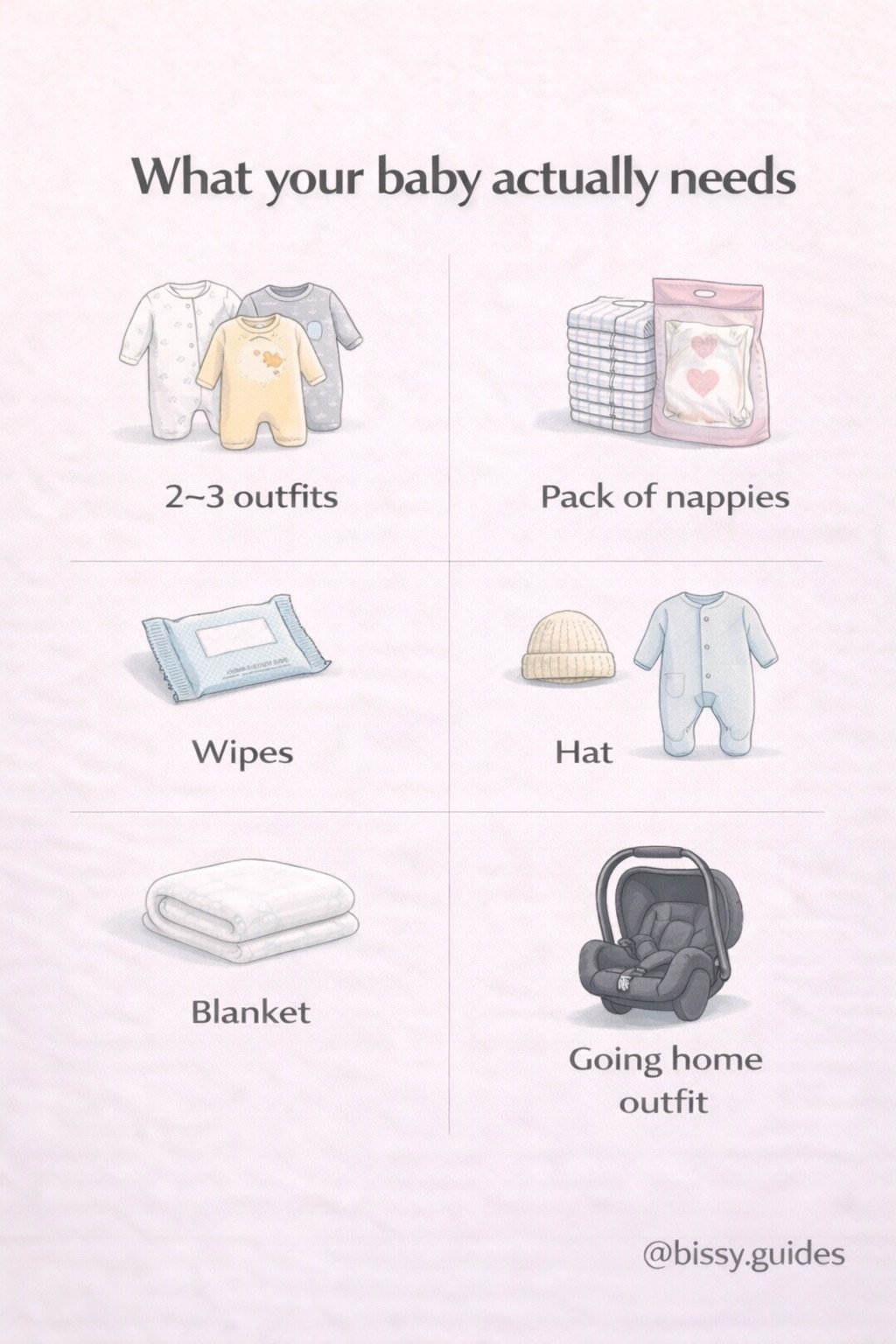
What Baby Actually Needs
Babies usually need less in hospital than people expect.
For a shorter stay, it’s often just the basics:
2–3 outfits
nappies
wipes
hat
blanket for going home
going-home outfit
car seat ready for discharge
Most babies spend the majority of their hospital stay:
feeding
sleeping
being changed
cuddled
skin-to-skin
…which usually means the essentials are much simpler than people imagine.
Ready-made formula is something some parents pack just in case, especially if feeding plans feel flexible — although it’s also something plenty of people bring and never end up using.
Feeding can look very different once baby arrives.
If you’re thinking ahead about that too, Newborn Feeding Explained Simply and Breastfeeding Basics are both useful to have saved before birth.
Final thought
Hospital bag packing can feel like a lot.
But most people don’t end up needing as much as they expected.
The things that usually matter most are:
comfort
hydration
easy feeding access
practical postpartum basics
and a few small items that make the stay feel easier
A realistic hospital bag doesn’t need to be packed perfectly.
It just needs to have the things you’re most likely to reach for.
This isn’t professional advice — just a simple breakdown of what I’ve found helpful.
Most of this is easier to understand visually.
I’ve put all my guides into one place so you can browse them properly.
FAQs
How many outfits does a baby actually need in hospital?
Usually around 2–3 outfits plus a going-home outfit is enough for a shorter stay.
Do hospitals provide maternity pads?
Many do, but it varies between hospitals and maternity wards, so bringing your own backup is still worth considering.
Do you need a long charger in your hospital bag?
Usually yes — it’s one of the most commonly used items because plug sockets are often far from the bed.
Should you pack full-size toiletries?
Mini toiletries are usually enough unless you’re expecting a longer stay.
What do people actually use most in their hospital bag?
Usually snacks, drinks, lip balm, charger, comfortable postpartum clothing, nappies, wipes, and baby’s going-home outfit.
Explore more guides