How to Help Your Baby Learn to Walk
Quick answer
Babies learn to walk at their own pace, and there's a wide range of what's considered normal. This guide explains simple ways to encourage walking while supporting your baby's natural development.
Watching those first wobbly steps can be exciting, but walking actually begins long before a baby walks independently.
By the time babies take their first steps, they've usually spent months developing strength, balance, coordination, and confidence through earlier milestones such as rolling, sitting, crawling, and standing. The good news is that supporting walking doesn't require special equipment or structured lessons. Simple opportunities to move and explore often help the most.
Cruising Counts
Cruising is often one of the biggest signs that independent walking is getting closer.
Moving sideways along furniture helps babies learn to:
Shift their weight
Balance on one leg briefly
Coordinate stepping movements
Build confidence
Cruising usually develops after babies have become comfortable standing and pulling themselves upright.
If your baby is still working on earlier milestones, you may find these guides helpful:
Each milestone helps build the strength and coordination needed for the next stage.
Safe Furniture Helps
Babies learn through repetition.
A sturdy sofa, low table, or fixed furniture gives babies opportunities to:
Pull to stand
Practise balance
Cruise safely
Explore movement independently
Creating opportunities throughout the day is often more valuable than structured practice sessions.
If you're unsure how milestones fit together, the Baby Milestones guide gives a useful overview of how movement skills tend to progress over the first year.
What helps: Products I actually used
Large Foam Play Mat. Provides a comfortable space for rolling, sitting, crawling and standing practice.
Push walker – Provides a stable surface for babies to practise stepping and building confidence while moving.
Soft play blocks – Encourage climbing, reaching, and weight shifting, which all support balance and coordination.
Push Toys Encourage Practice
Some babies enjoy practising with a sturdy push toy.
Push toys can encourage:
Stepping
Balance
Confidence
Weight shifting
The key is choosing a stable toy that moves slowly and doesn't roll away too quickly.
For more movement-based play ideas, see:
Play is often where many movement skills naturally develop.
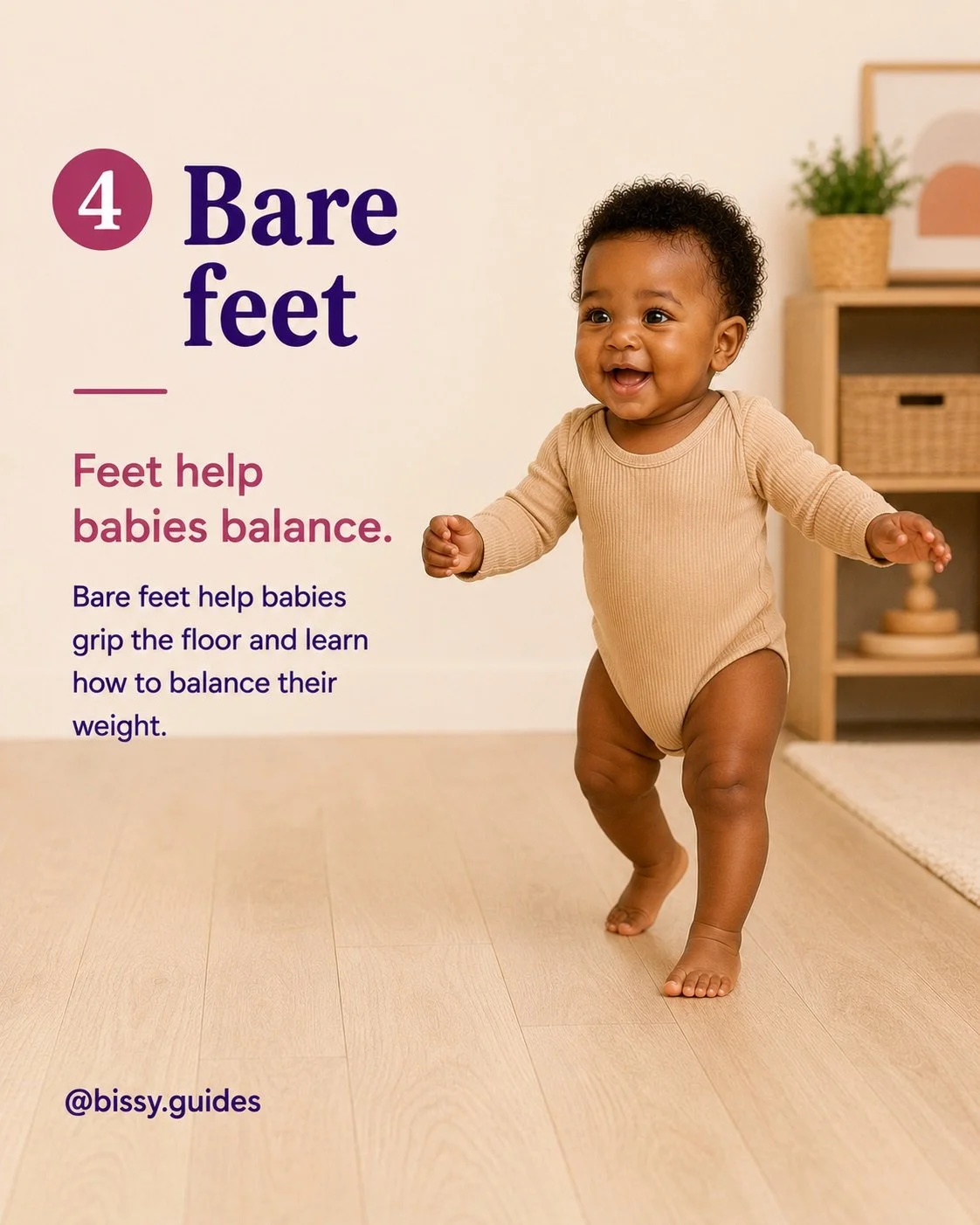
Bare Feet Are Best
Bare feet help babies:
Feel the floor beneath them
Develop foot strength
Improve grip
Learn balance naturally
When possible, many babies benefit from being barefoot indoors while practising standing, cruising, and walking.
As mobility increases, you may also notice your baby becoming more interested in exploring independently, climbing furniture, and moving between activities. These are all signs that movement confidence is growing.
Final thought
Walking isn't a skill that appears overnight.
By the time babies take their first independent steps, they've usually spent months building strength through rolling, sitting, crawling, standing, cruising, climbing, and play.
The best way to support walking is often to support everything that comes before it.
This isn’t professional advice — just a simple breakdown of what I’ve found helpful.
Most of this is easier to understand visually.
I’ve put all my guides into one place so you can browse them properly.
FAQs
When should my baby start walking?
Many babies take their first independent steps between 9 and 18 months. There is a wide range of normal, and some babies walk earlier or later than others.
How can I encourage my baby to walk without pushing them?
The best approach is providing opportunities to move, cruise, stand, and explore safely. Most babies develop walking skills naturally when they are ready.
Is cruising a sign that walking is close?
Often, yes. Cruising helps babies practise balance and weight shifting, which are important skills needed for independent walking.
Are push walkers good for learning to walk?
A sturdy push walker can encourage stepping and confidence. However, it won't make a baby walk sooner if they are not developmentally ready.
Should babies learn to walk barefoot?
When indoors and safe to do so, barefoot walking can help babies develop balance, grip, and foot strength.
What if my baby is not walking yet?
Many babies walk later than parents expect. If your baby is approaching 18 months and is not yet walking independently, speak with your health visitor or GP for personalised advice.
Explore more guides