Safe exercises to help relieve pelvic girdle pain
Quick answer
Pelvic girdle pain (PGP) can make everyday movements like walking, rolling over in bed, climbing stairs or getting out of the car uncomfortable during pregnancy. Gentle exercises such as pelvic tilts, cat-cow stretches and birthing ball movements, along with small changes to posture and daily movement, may help reduce strain and improve comfort.
Pelvic girdle pain can make ordinary movement feel much harder than expected during pregnancy.
Walking, rolling in bed, getting dressed, standing up, climbing stairs — even getting out of the car can suddenly feel uncomfortable.
While rest can help, movement often matters too.
This guide focuses on gentle exercises and small daily adjustments that may help reduce strain through the hips and pelvis during pregnancy.
What feels good will vary person to person, but these are some of the movements and positioning tips many people find supportive.
Gentle stretches that may help
Pelvic tilts and cat-cow stretches are often some of the most comfortable movements to start with.
They can gently release tension through the lower back while encouraging movement through the pelvis without adding too much strain.
Slow movement usually feels best here.
It doesn’t need to feel intense to feel supportive — even a few slow repetitions can feel relieving.
If getting comfortable at night has become difficult too, my Pregnancy Pillows Explained guide covers different pillow styles and sleeping positions that may help support your hips, pelvis and bump.
Daily habits that may ease the strain
Sometimes it’s not about doing more — it’s about adjusting how you move through the day.
Small things can make a difference, like:
sitting down to get dressed
avoiding standing on one leg
changing position regularly
taking shorter walks if needed
resting before pain feels worse
Often the tiny daily movements are the ones you feel most.
If you're getting close to meeting your baby, you might also find my Hospital Bag Checklist helpful for getting organised before mobility becomes more uncomfortable.
What helps: Products I actually used
You don’t need loads of toys — just ones that match what they’re working on.
Pelvic support belt. Can feel supportive during walking or standing by taking some pressure off the pelvis and bump.
Birthing ball. Useful for gentle rocking, hip circles, pelvic tilts, or simply sitting more comfortably during the day.
Pregnancy pillow.Helpful for side sleeping, especially with support between the knees to reduce pressure through the hips overnight.
Safe exercises to help relieve pelvic girdle pain
Gentle, low-impact exercise can often help reduce stiffness and improve comfort during pregnancy. The aim isn't to push through pain, but to keep the body moving in a way that feels supportive. If an exercise makes your pain worse, stop and speak to your midwife or women's health physiotherapist.
Then keep your list:
Gentle walking
Swimming
Birthing ball exercises
Pelvic tilts
Cat-cow stretches
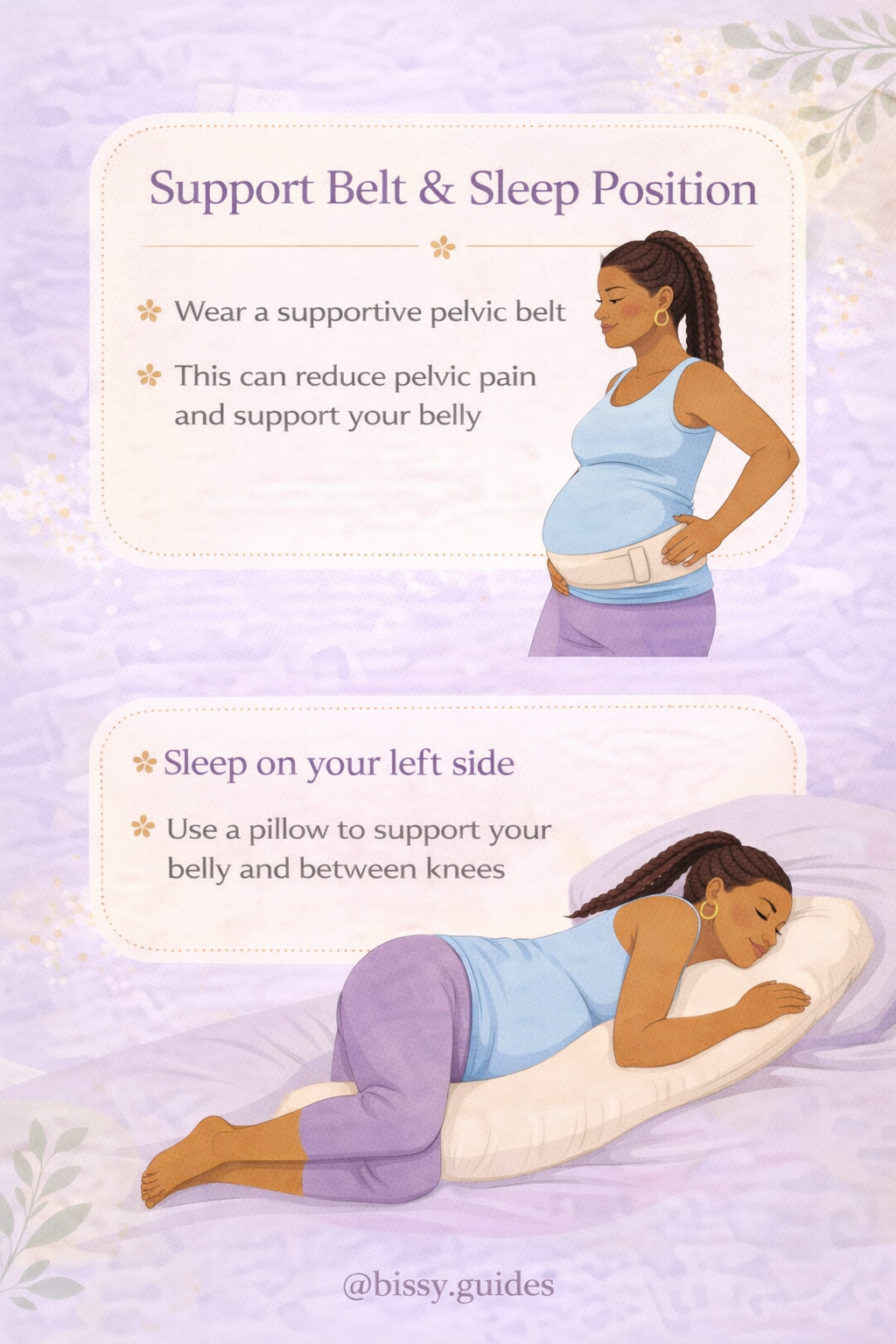
Support and sleep positioning
Support can make a big difference, especially later in the day or overnight.
Things that may feel helpful include:
a pillow between the knees in bed
bump support with pillows while resting
side sleeping with the hips supported
a pelvic support belt during the day if recommended
Posture and standing support
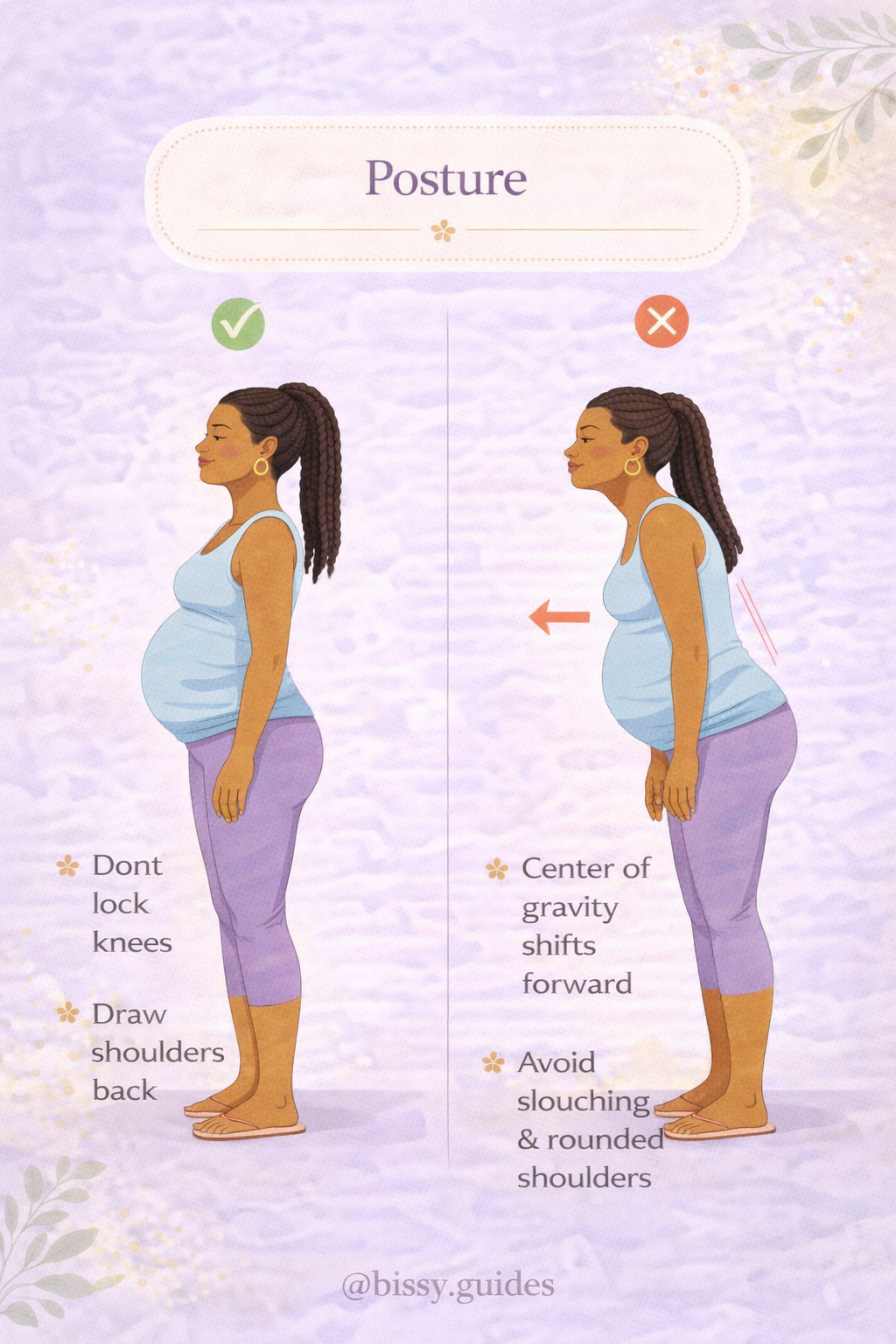
Pregnancy naturally shifts your centre of gravity forward, which can change how pressure moves through the pelvis.
Standing with weight balanced evenly across both feet can sometimes feel better than leaning heavily into one hip.
Try not to overcorrect posture — think supported and relaxed rather than “standing perfectly.”
Little adjustments often feel better than forcing yourself upright.
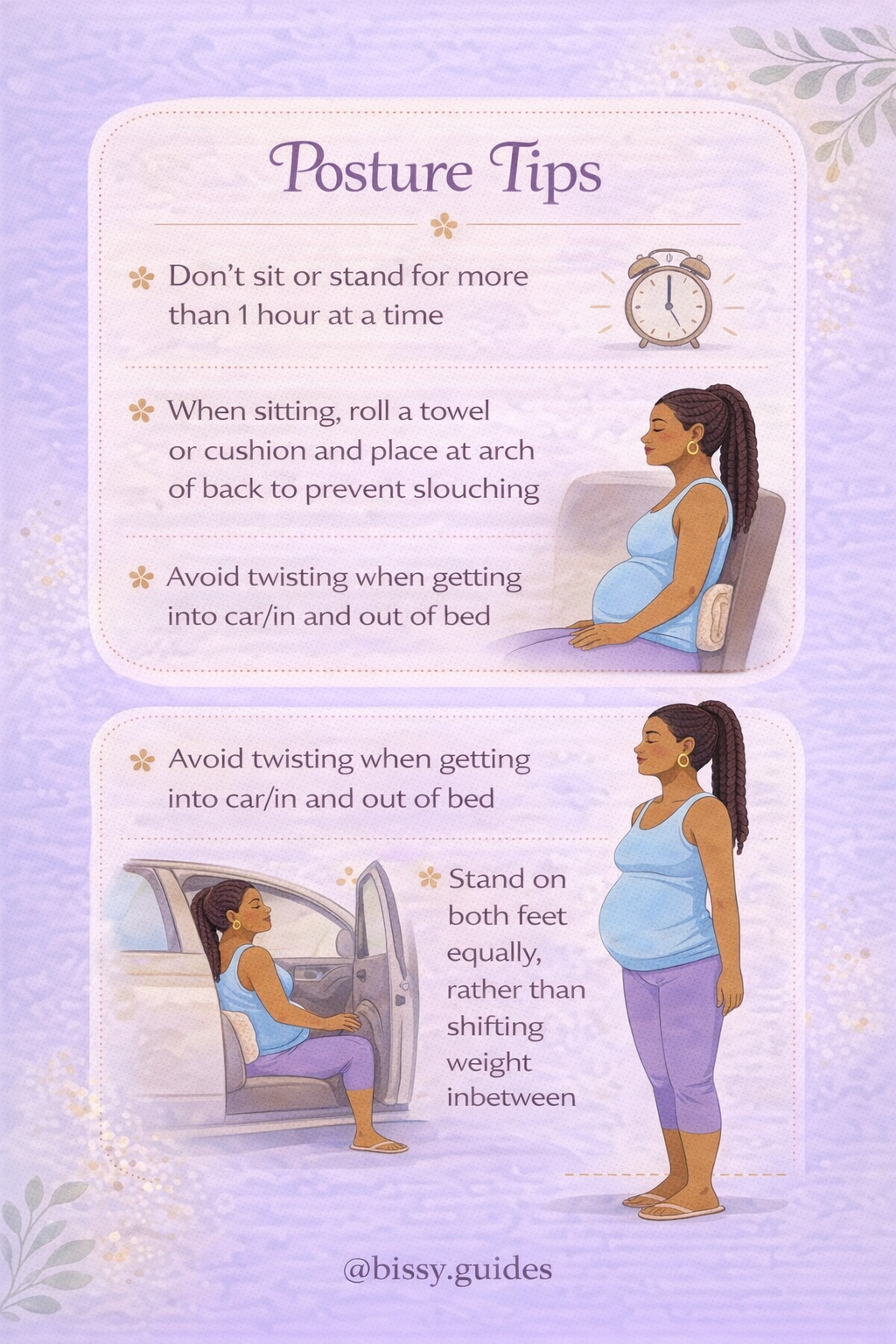
Movement tips for day-to-day life
A few practical movement changes can sometimes feel surprisingly helpful:
keep knees together when getting in and out of bed
keep knees together when getting out of the car
avoid twisting sharply when moving
take smaller steps
move slowly when rolling over
sit rather than balancing on one leg
Pelvic girdle pain can feel frustrating because it shows up during normal things.
Sometimes the goal isn’t fixing it completely — it’s simply easing the strain where you can.
If you're approaching your due date, you may also find my What to Expect During Labour guide helpful so you know what typically happens once labour begins.
Final thoughts
If this isn't your first pregnancy, you might also enjoy my Pregnancy vs Second Pregnancy guide, which looks at some of the common differences people notice between pregnancies—including how aches and pains can vary.
This isn’t professional advice — just a simple breakdown of what I’ve found helpful.
Most of this is easier to understand visually.
I’ve put all my guides into one place so you can browse them properly.
FAQs
What exercises help pelvic girdle pain during pregnancy?
Pelvic tilts, cat-cow stretches, gentle birthing ball movement, swimming, and short walks are some of the most commonly recommended. Gentle movement usually feels more manageable than anything high-impact.
Can a birthing ball help pelvic girdle pain?
It can. Gentle rocking, circles, or sitting upright on a birthing ball can feel more comfortable than sitting in a firm chair for long periods.
Is walking good for pelvic girdle pain?
Sometimes. Short gentle walks may feel helpful, while longer walks may increase discomfort. It often depends how your body feels during and afterwards.
Can stretching make pelvic girdle pain worse?
It can if the stretch feels sharp, unstable, or painful. Gentle supported movement tends to feel best. If something worsens symptoms, it’s okay to stop.
When should I ask for help with pelvic girdle pain?
If pain is worsening, affecting walking, disturbing sleep regularly, or making day-to-day movement difficult, it’s worth speaking to your midwife, GP, or women’s health physio.
Explore more guides