Preparing for Parenthood: what I’d genuinely think about first
Quick answer
Preparing for parenthood is about getting ready for the practical and emotional changes that come with having a baby. This guide covers what can help you feel more prepared before your baby arrives.
Before having kids, I think most people expect the biggest changes to be the obvious ones — nappies, sleepless nights, buying baby things.
But honestly, a lot of the biggest adjustments are the practical everyday things nobody really explains properly until you’re already in it.
Not in a scary way. Just in a very real “your daily life changes more than you expect” kind of way.
These are the things I’d genuinely think about beforehand.
Money & work
Finance
Babies don’t have to cost a fortune, and you absolutely do not need to be rich to become a parent. But monthly costs do add up quickly once you factor in nappies, wipes, formula or feeding supplies, clothes, childcare and general day-to-day life.
A lot of it isn’t one huge expense — it’s the constant smaller ones.
Second-hand baby items can also save a huge amount of money. Places like Vinted, Facebook Marketplace, Gumtree, eBay and local community groups often have bundles of clothes, baby furniture and pushchairs for much cheaper — sometimes even free.
I’d personally be more cautious with things like car seats unless you fully know their history, but plenty of other baby items are genuinely fine second-hand.
Maternity or paternity pay
This is probably one of the biggest shocks for a lot of people. Statutory maternity pay can feel very different from your normal income, especially if you’re used to two steady wages.
It’s worth checking what your workplace actually offers early on rather than assuming it’ll all balance itself out later.
Time off work
A lot of people focus on how long leave exists for, but realistically the bigger question is:
how long can you actually afford to take?
Some people are ready to return earlier than expected. Others really aren’t. Both are normal.
Savings
I don’t think you need massive amounts of money saved before having kids, but having some sort of buffer genuinely helps mentally.
Emergencies, unexpected costs and life in general feel very different once a child depends on you.
You might also like my post on Preparing for a Baby: what you actually need, because buying less but buying smarter genuinely helps financially too.
Your setup & daily life
Space
This isn’t really about having a huge house. It’s more about storage, routine and general day-to-day functionality.
Babies somehow come with a surprising amount of stuff, even when you try to keep things minimal.
Not everyone has space for a full nursery or endless baby storage — and honestly, plenty of families make smaller spaces work perfectly well.
Childcare
Childcare is one of the biggest practical conversations to have early. Costs, availability and waiting lists can completely change what returning to work looks like.
Even figuring out who will do drop-offs, pickups and sick days becomes part of daily life very quickly.
Location
Things you barely think about before kids suddenly start feeling important:
nearby shops
parking
parks
support nearby
how easy it is to leave the house with a baby
It’s often less about the area looking perfect and more about daily convenience.
If you’re currently planning for a newborn stage too, my Hospital Bag Essentials guide pairs well with this because it helps you focus on what’s genuinely useful rather than overbuying.
What helps: Products I actually used
Foldable changing station. Helpful if you’re short on space or don’t want a full changing station taking over the room.
Nappy caddy. Handy because everything stays in one place instead of spread around the house.
Vacuum storage bags. Honestly one of the easiest ways to store baby clothes, blankets and outgrown sizes without everything piling up.
Bed rails for toddler beds. A good option if you don’t have space for multiple room changes or a full nursery setup later on.
Support & relationships
Your village
People joke about “it takes a village,” but honestly even occasional help can make a huge difference.
Whether that’s family, friends, neighbours or paid support, having people around you matters more than most people realise beforehand.
Time as a couple
If you’re parenting with someone, your relationship changes after kids. Not necessarily badly — just differently.
Even finding time to sit together uninterrupted can suddenly feel harder than expected.
Time for yourself
This was probably one of the biggest things I underestimated.
Even small breaks start feeling important once another person constantly needs something from you. Having a bit of flexibility or support around you can genuinely protect your mental load.
This also links quite naturally with my Velcro Baby guide, because some babies genuinely want constant closeness and it can feel intense if you’re not expecting it.
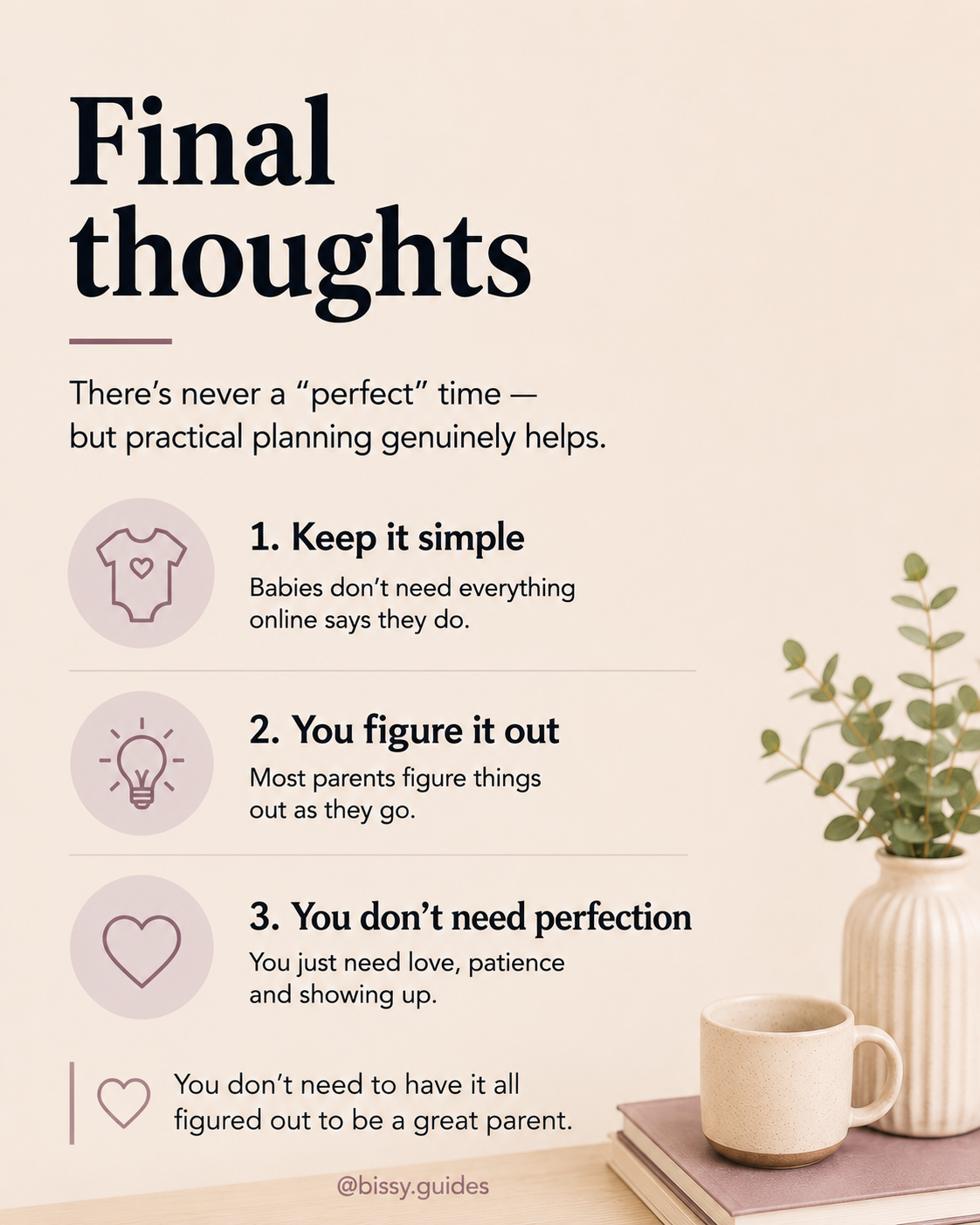
There’s never really a “perfect” time to have kids. Life usually still feels messy, unfinished or financially imperfect in some way.
But practical planning does help. Not because you need to control everything — mostly because it reduces stress later.
You also don’t need every expensive baby item online tells you to buy. Most parents figure things out as they go, adjust constantly and learn what works for their own family over time.
This isn’t professional advice — just a simple breakdown of what I’ve found helpful.
Most of this is easier to understand visually.
I’ve put all my guides into one place so you can browse them properly.
FAQs
How much money should you save before having a baby?
There’s no perfect amount. I think having some sort of emergency buffer helps more than aiming for a huge unrealistic savings goal.
Is childcare really that expensive?
For a lot of families, yes. It’s worth researching early because costs and waiting lists can affect work decisions quite a lot.
Do you need a big house before having kids?
Not necessarily. Practical space and organisation matter more than having a huge home.
What is the hardest adjustment after having a baby?
Honestly, I think the mental load and constant responsibility surprised me more than the physical side.
Is there ever a perfect time to have kids?
Probably not. Most people still feel unprepared in some way, even when they’ve planned carefully.
Explore more guides