Flying With a Baby: Things to Think About Before You Book
Quick answer
Flying with a baby can feel daunting, but a little preparation goes a long way. This guide covers practical tips for the airport, the flight itself and making travel as smooth as possible.
Flying with a baby is one of those things that often feels more intimidating before you do it. Questions about naps, feeds, airport security, luggage and how your baby will cope on the plane can quickly make the trip feel overwhelming.
The reality is that most flights with a baby are manageable with a little preparation. Thinking about your baby's routine, allowing extra time at the airport and planning for delays can make the journey much smoother.
This guide covers some of the practical things worth considering before you book, at the airport and during the flight itself.
Before You Book
One of the biggest things that can influence a flight is timing. While every baby is different, it can be worth considering how the flight fits around their usual routine.
Some parents prefer to fly during a nap. Others prefer a flight when their baby is normally awake and content. There isn't a right answer, but thinking about nap times, feeding times and arrival times before booking can help avoid unnecessary stress.
Direct flights can also make travelling simpler. A short layover might not seem significant when travelling alone, but it can feel very different when you're managing feeds, nappies and a tired baby.
If your baby is already following a predictable routine, you may also find it helpful to consider how arrival time will affect the rest of the day.
If sleep timing is something you're currently working on, my Baby Sleep Troubleshooter and Wake Windows Explained Simply guides may help you better understand your baby's routine before travelling.
At the Airport
Airports nearly always take longer than expected with a baby.
Allowing extra time can reduce pressure and gives you a chance to feed and change your baby before boarding. Many parents find this makes the first part of the flight much easier.
If possible, keeping your buggy until you reach the boarding gate can also make getting around the airport significantly easier.
A baby carrier can be useful when going through security and navigating busy terminals, particularly if your baby prefers being held.
If you're travelling with an older baby who enjoys exploring, you may find some of the ideas in my Help Baby Crawl, Help Baby Stand and Help Baby Walk guides useful when thinking about how active they may want to be while waiting at the airport.
What helps: Products I actually used
Nappy bag with portable changing mat — keeps changing essentials organised and easy to access.
Two-way baby carrier — useful for airports, sightseeing, and hands-free travel.
Noise cancelling headphones — helpful for flights and noisy travel environments.
Dummy clip – Helps prevent comfort items ending up on the floor.
Keeping Baby Comfortable During the Flight
The flight itself is usually easier when basic needs are already taken care of.
Many parents choose to feed their baby shortly before boarding and again during take-off or landing. Feeding, sucking or using a dummy may help some babies manage pressure changes during ascent and descent.
It's also worth packing more nappies than you think you'll need. Delays, extended boarding times and unexpected accidents can happen.
Spare clothes are useful not only for baby but sometimes for parents too.
Airplanes can feel cool one moment and warm the next, so dressing baby in layers can make temperature changes easier to manage.
Travel Essentials
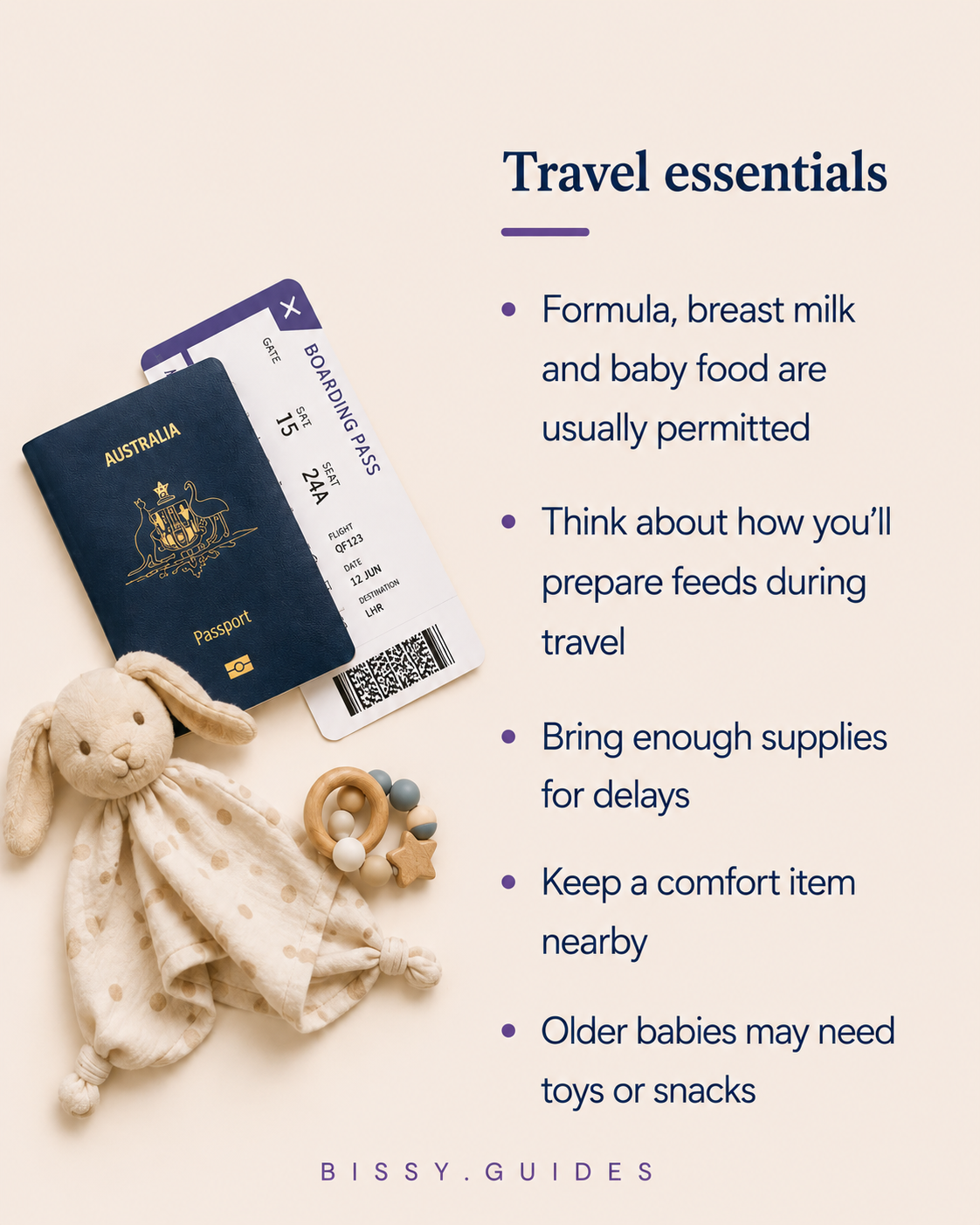
Many parents are surprised to learn that formula, expressed breast milk and baby food are usually permitted when travelling with a baby, even when standard liquid restrictions apply.
Rules can vary slightly between airports and countries, so it's always worth checking before travelling.
When packing, consider what would happen if your flight was delayed by several hours. Bringing a little extra formula, milk, snacks or baby food can provide peace of mind.
Comfort items can also be surprisingly helpful. Familiar toys, comforters or books may help older babies settle more easily in an unfamiliar environment.
As babies become more active, entertainment often becomes more important. If your baby enjoys exploring and interacting with their environment, my Why Play Matters and Developmental Toys by Age guides contain ideas that can be adapted for travel.
Your Baby's Age Matters
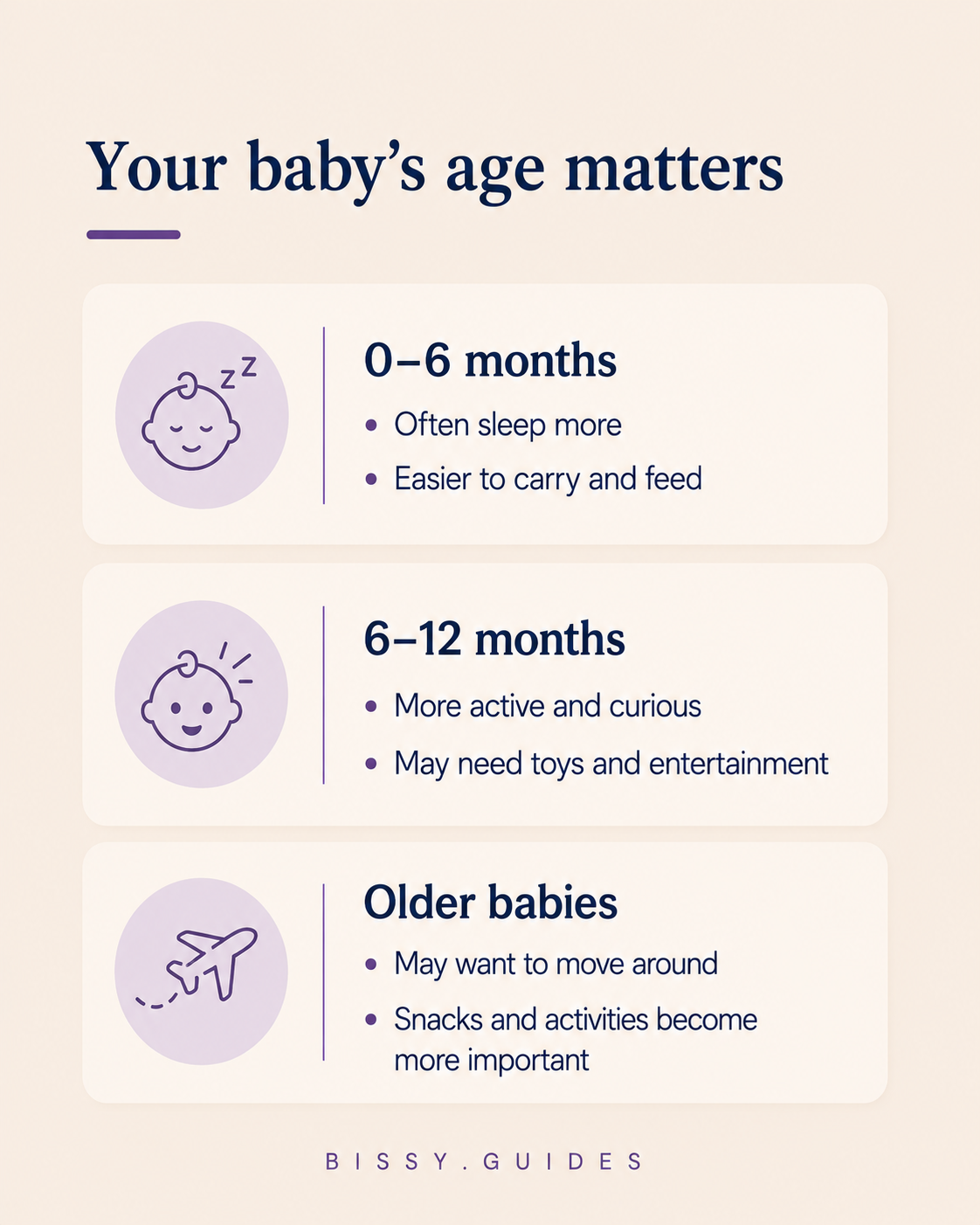
The experience of flying changes significantly depending on your baby's age.
0–6 Months
Many younger babies sleep for large portions of the journey and are often easier to carry and feed while travelling.
6–12 Months
Babies become more aware of their surroundings and may want more interaction, entertainment and movement.
Older Babies
As mobility increases, many babies become less interested in sitting still for long periods. Snacks, toys and opportunities to move around safely can become increasingly important.
This is often the stage where parents start noticing many of the same developmental changes discussed in my Baby Milestones guide.
Final thought
Flying with a baby isn't always easy, but it doesn't have to be as stressful as many parents expect.
Planning around your baby's routine, allowing extra time at the airport and preparing for delays can make a significant difference. Every baby travels differently, and sometimes flexibility is just as important as preparation.
This isn’t professional advice — just a simple breakdown of what I’ve found helpful.
Most of this is easier to understand visually.
I’ve put all my guides into one place so you can browse them properly.
FAQs
What is the best age to fly with a baby?
There isn't a perfect age. Some parents find younger babies easier because they sleep more, while others prefer waiting until feeding and routines are more established.
How do I protect my baby's ears on a plane?
Feeding, using a bottle, breastfeeding or offering a dummy during take-off and landing may help some babies manage pressure changes.
Can I take formula and baby food through airport security?
In most cases, yes. Formula, expressed breast milk and baby food are usually allowed, although they may be screened separately.
Should I feed my baby before boarding a flight?
Many parents find feeding and changing their baby before boarding helps them start the flight more comfortably.
Can I keep my buggy until the plane?
Many airlines allow gate-checking, where the buggy is kept until boarding and collected after landing. Policies vary, so check with your airline.
How many nappies should I pack for a flight?
A common rule is to pack more than you think you'll need, particularly in case of delays or unexpected disruptions.
Is a baby carrier useful in the airport?
Many parents find carriers helpful for security checks, boarding and navigating crowded terminals.
What should I do if my baby won't settle on the plane?
Try offering feeds, comfort items, movement where appropriate and familiar routines. Flexibility is often key when travelling.
Can babies sleep on a plane?
Many babies do sleep during flights, particularly younger babies, although sleep patterns may differ from home.
What should I pack in my baby's hand luggage?
Essentials usually include nappies, wipes, spare clothes, feeds, comfort items, snacks for older babies and any medications they may need.
Explore more guides